Managing up: how to manage your manager, one conversation at a time
Managing up means working with your boss so that both of you succeed: you learn what they care about, keep them informed the way they prefer and deliver what you promised. It is not flattery. Most of it is memory and follow-through, and that is where Mars helps: it keeps what your manager told you, prepares you for each one-on-one and reminds you of every commitment.
What managing up means, and what it is not
Managing up is the practice of making your manager's job easier while moving your own work forward. You understand their goals and pressures, adapt to how they like to communicate and bring them solutions instead of surprises. Sucking up is about their ego; managing up is about shared results.
- Know your manager's goals, deadlines and the pressure they get from above
- Match their style: detail or summary, chat or meeting, morning or evening
- Bring options and a recommendation, not only problems
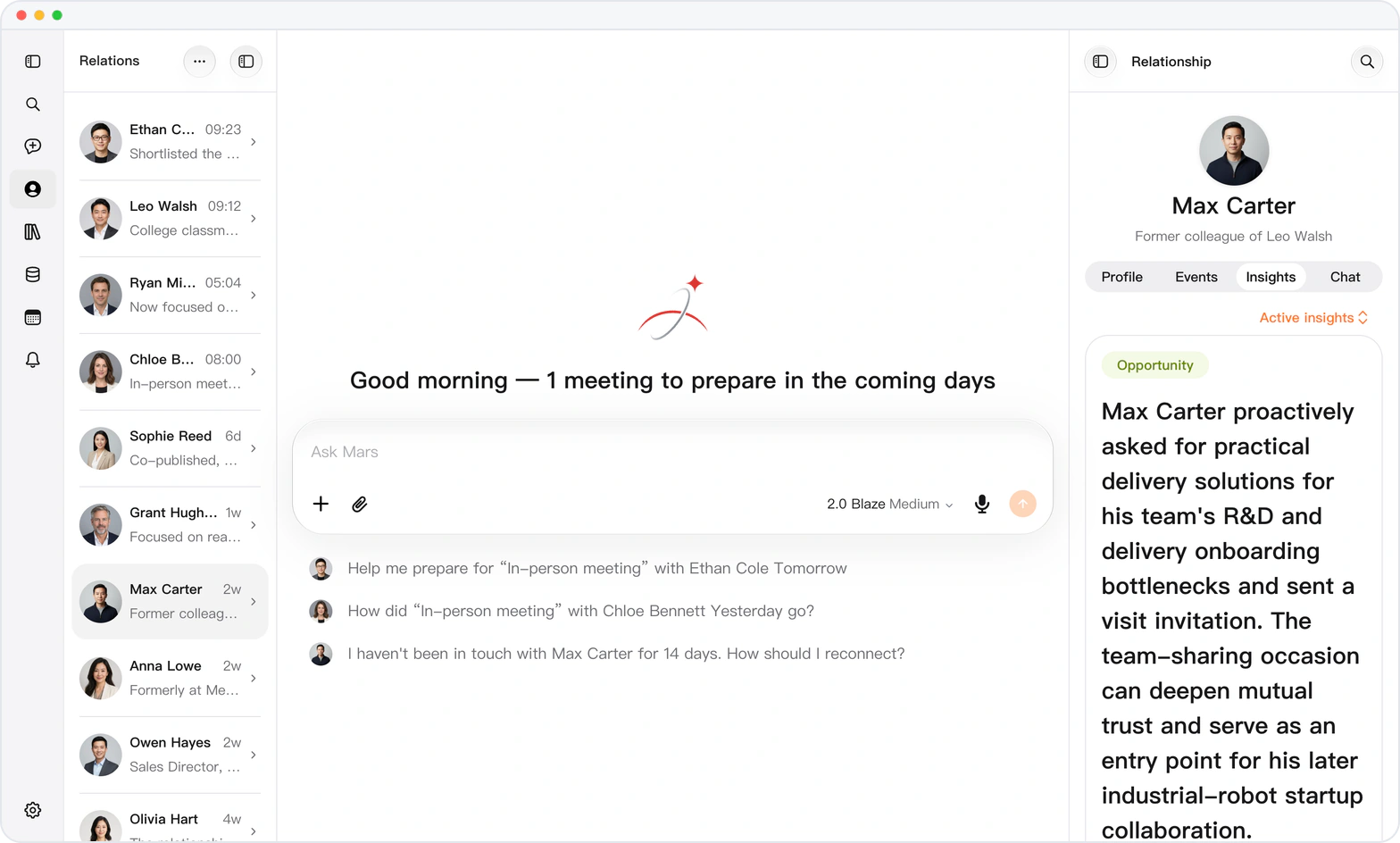
Manager vs leaders: how to manage up to each one above you
A manager is a role: they plan the work, own the deadlines and are measured on delivery. A leader is someone people follow: they set the direction and explain why it matters. Your direct manager usually leans one way and the senior leaders above them the other, so managing up looks different for each. With your manager the currency is reliability: clear updates, kept promises, no surprises. With a senior leader it is their priorities and their time: one short ask tied to what they care about, then a result reported back. For example, your skip-level director says in a town hall that customer churn is the priority this half. When you meet her next, you open with the two churn numbers your team moved, not your project list. Mars keeps that remark on her page, so it is in your brief before the meeting.
- Manager: weekly progress, risks raised early, the decisions you need from them
- Senior leader: their stated priorities, one clear ask, the result reported back
- A separate page for your manager and for each leader above them
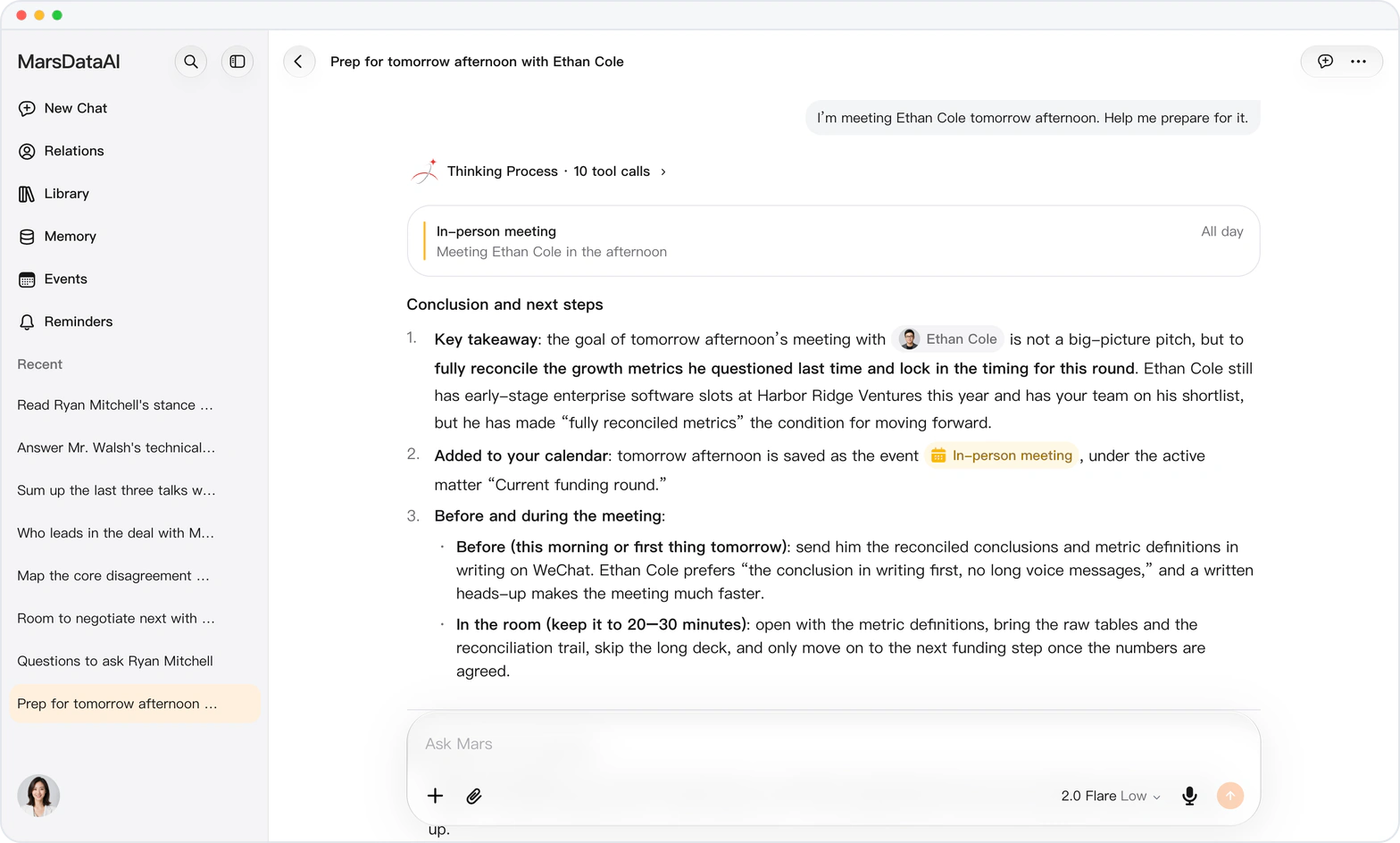
Learn what your manager cares about
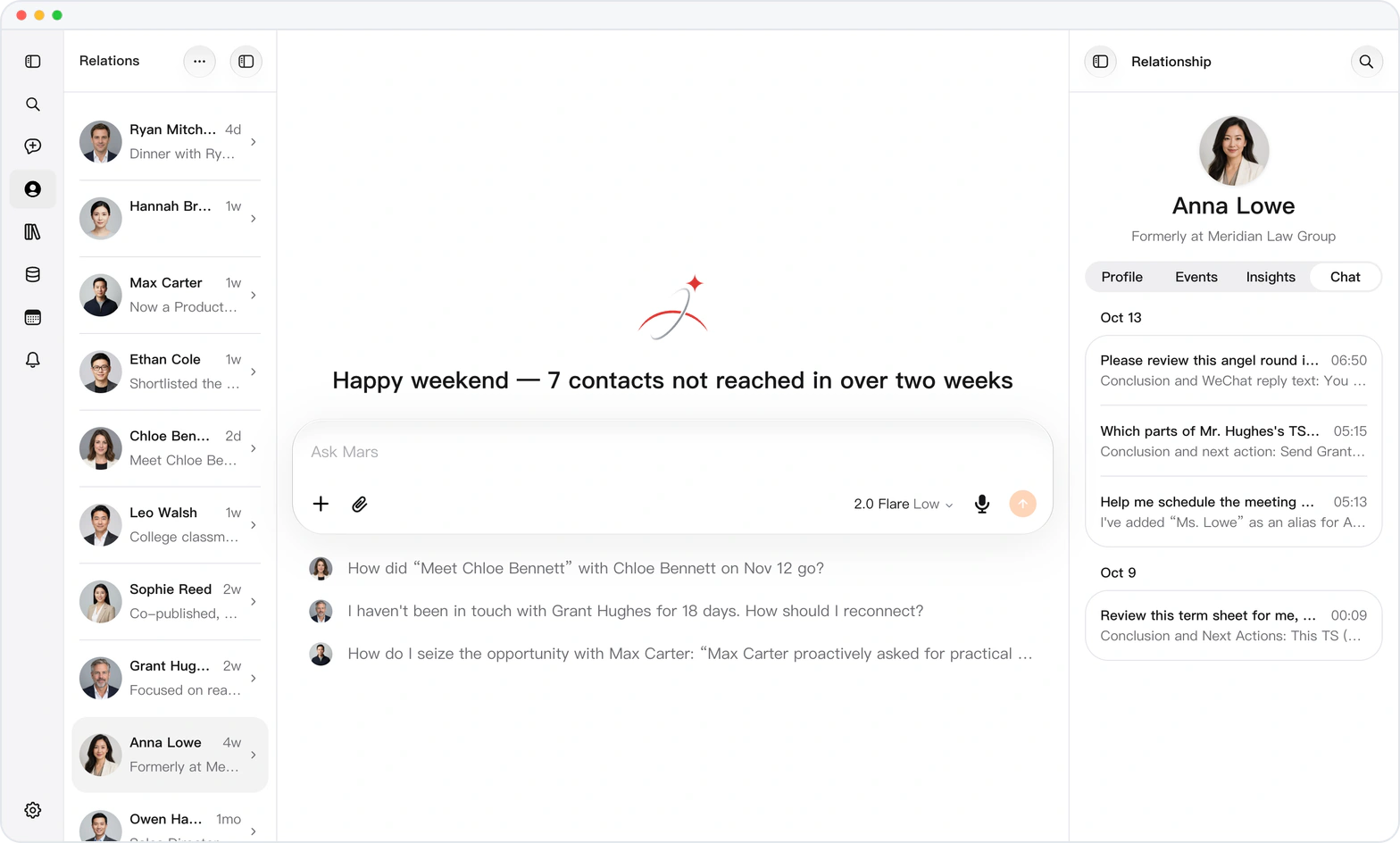
Every manager drops clues: the metric they ask about twice, the format they prefer, the topic that annoys them. Share a chat screenshot or a one-line note after a meeting and Mars files these details on your manager's page, so you can read them before you write the next update.
- Priorities, preferences and pet peeves kept on one page
- Each detail linked to the chat or meeting it came from
- The same record for your manager's manager and key peers
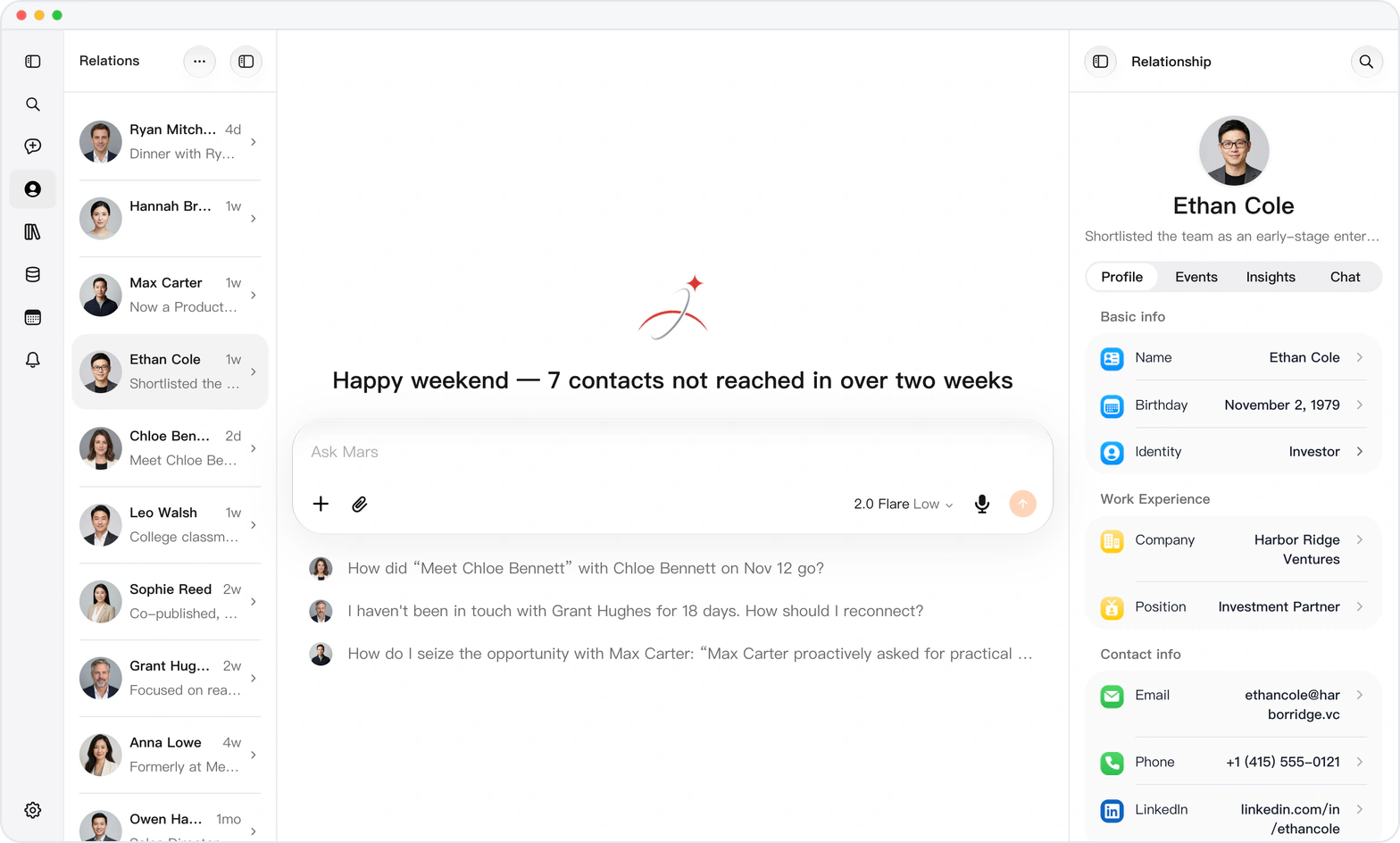
How to manage up in one-on-ones
A good one-on-one starts with what your manager asked for last time. Before the meeting Mars prepares a brief from your history with them: open items, decisions waiting on them and what you promised, so you lead the conversation instead of reacting to it.
- A pre-meeting brief built from past chats and notes
- Open questions and pending decisions listed first
- Action items from the meeting captured afterwards
Report progress before you are asked
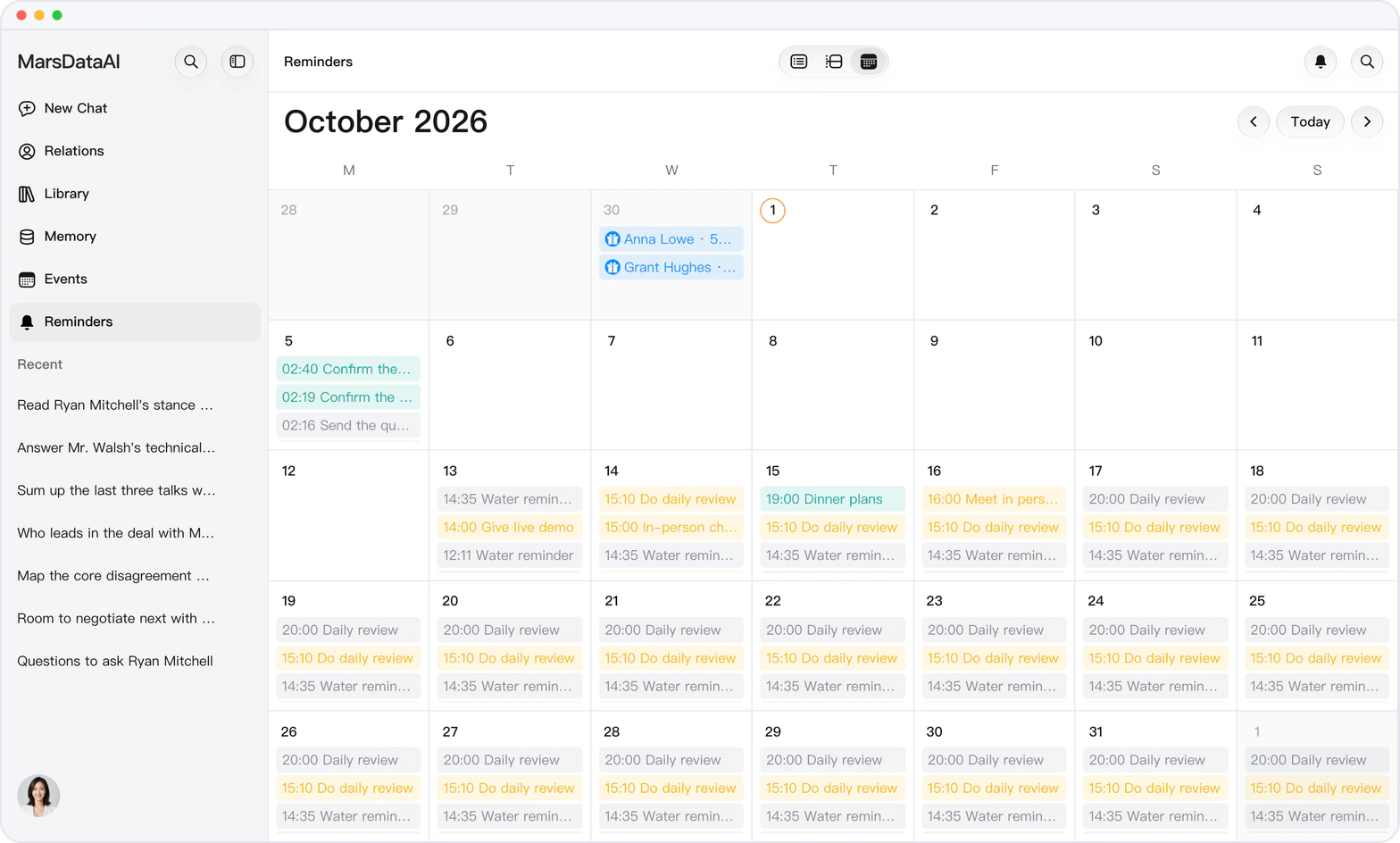
Nothing builds a manager's trust faster than updates that arrive before they chase you. When you say you will send numbers on Thursday, Mars turns it into a reminder and opens a conversation at that time with the context ready. Alerts can reach your WeChat as well.
- Promises and deadlines captured from your conversations
- Reminders that arrive with the background attached
- A short history of what you already reported
How to deal with a difficult boss
With a difficult boss, managing up depends on facts and calm replies. Mars keeps the full conversation history with your manager, so you can check what was actually agreed, and drafts a reply in a steady tone when a message makes you angry. You decide what to send.
- A factual record of requests, changes and agreements
- Reply drafts that stay calm and specific
- Patterns in how your manager reacts, visible over time
Start managing up with Mars
- AddAdd your manager and the people they report to.
- ShareSend chats and one-on-one notes; Mars files what matters.
- Follow throughUse the pre-meeting brief and act on each reminder.
See the rest of Use cases in MarsDataAI Wiki.