Relationship counseling: how it works, and how to get more from it
Relationship counseling (counselling in British spelling) helps two people break a pattern they cannot break alone. Mars is not a counselor. It is an AI relationship coach that reads the conversations you share, so you can name what keeps going wrong, find the right counselor and follow through between sessions.
Relationship counseling: what it is and what happens in the first session
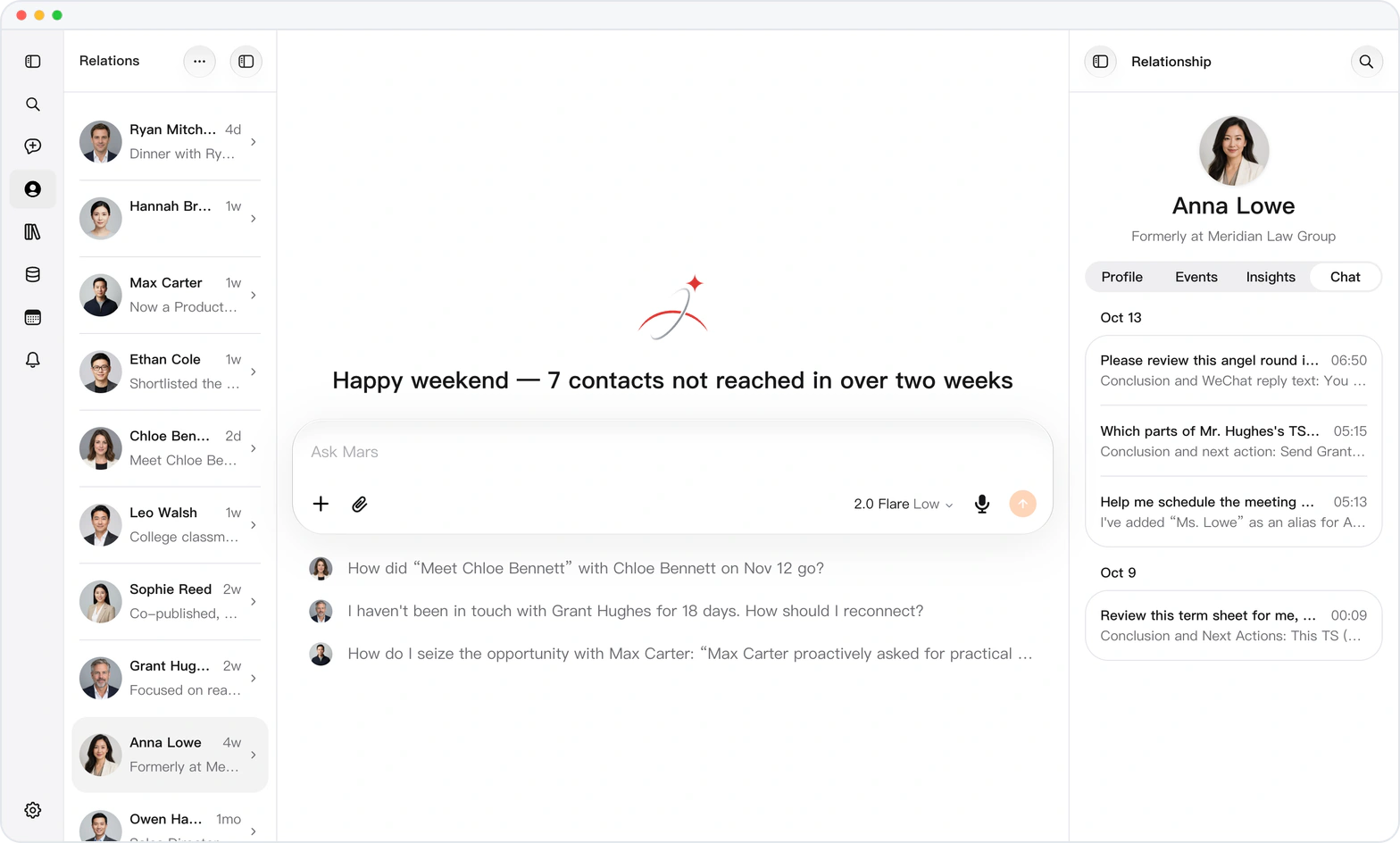
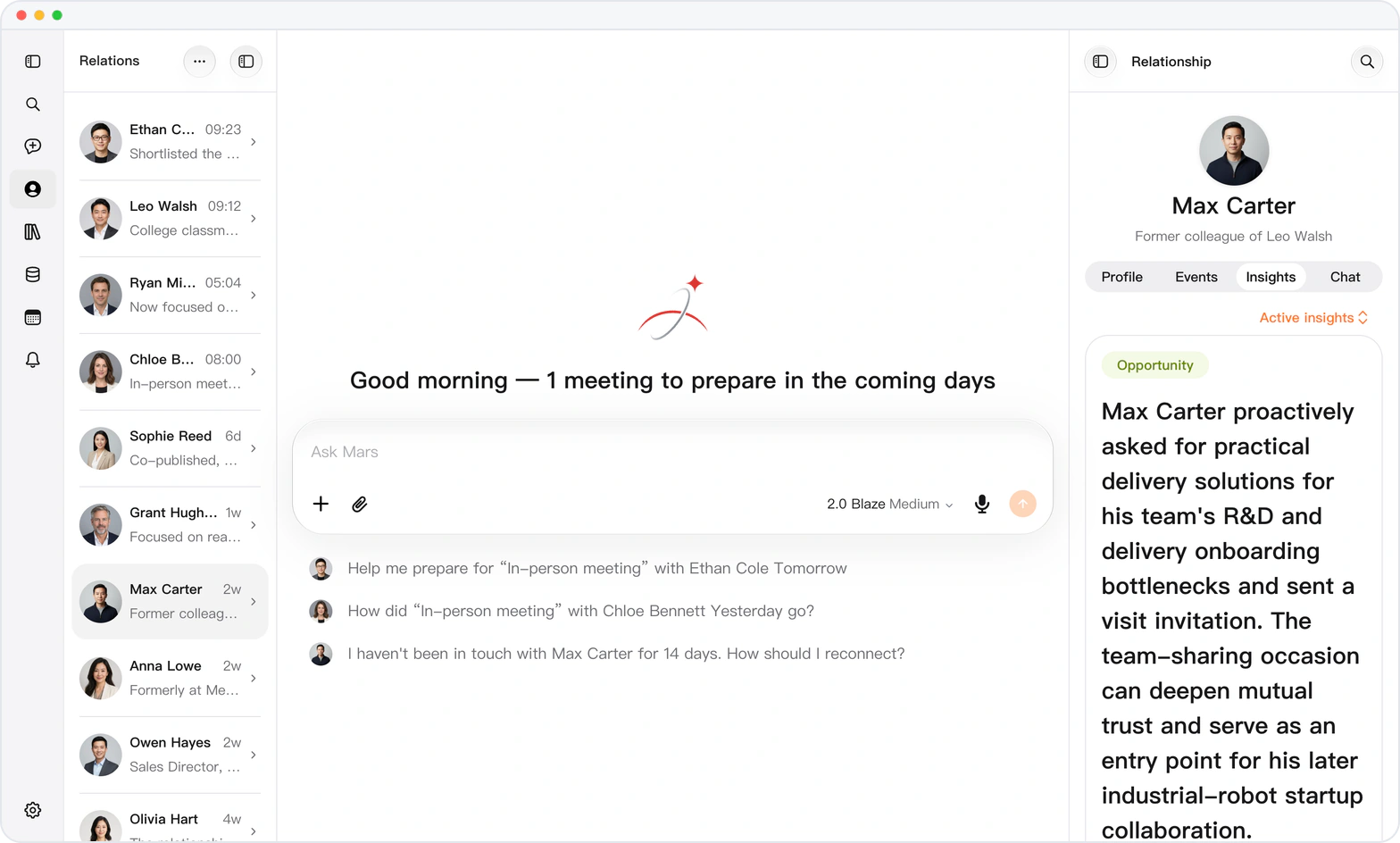
Relationship counseling is talk therapy for a relationship rather than for one person. A licensed counselor, therapist or psychologist meets the two of you, or one of you alone, in person or by video, and sessions usually last about an hour. The first session is mostly listening: what brings you in, your history together, what you have already tried and what each of you wants to change. Feeling nervous before it is common, and it helps to arrive with a few concrete goals. For example, you want to suggest counseling to your partner but worry it will sound like blame. Tell Mars what has been happening: it drafts a message that starts from what you both want ("I miss how we used to talk on Sunday mornings") and proposes trying three sessions, and once you book, it saves the appointment with a reminder and lists the two or three changes you most want, in your own words.
- A first session covers what brings you in, your history together and what each of you wants to change
- Nerves are normal; a short list of goals in your own words makes the hour count
- Mars drafts the invitation and your notes; it never contacts anyone for you
Relationship counseling near me: find and vet a counselor nearby or online, including low-cost options
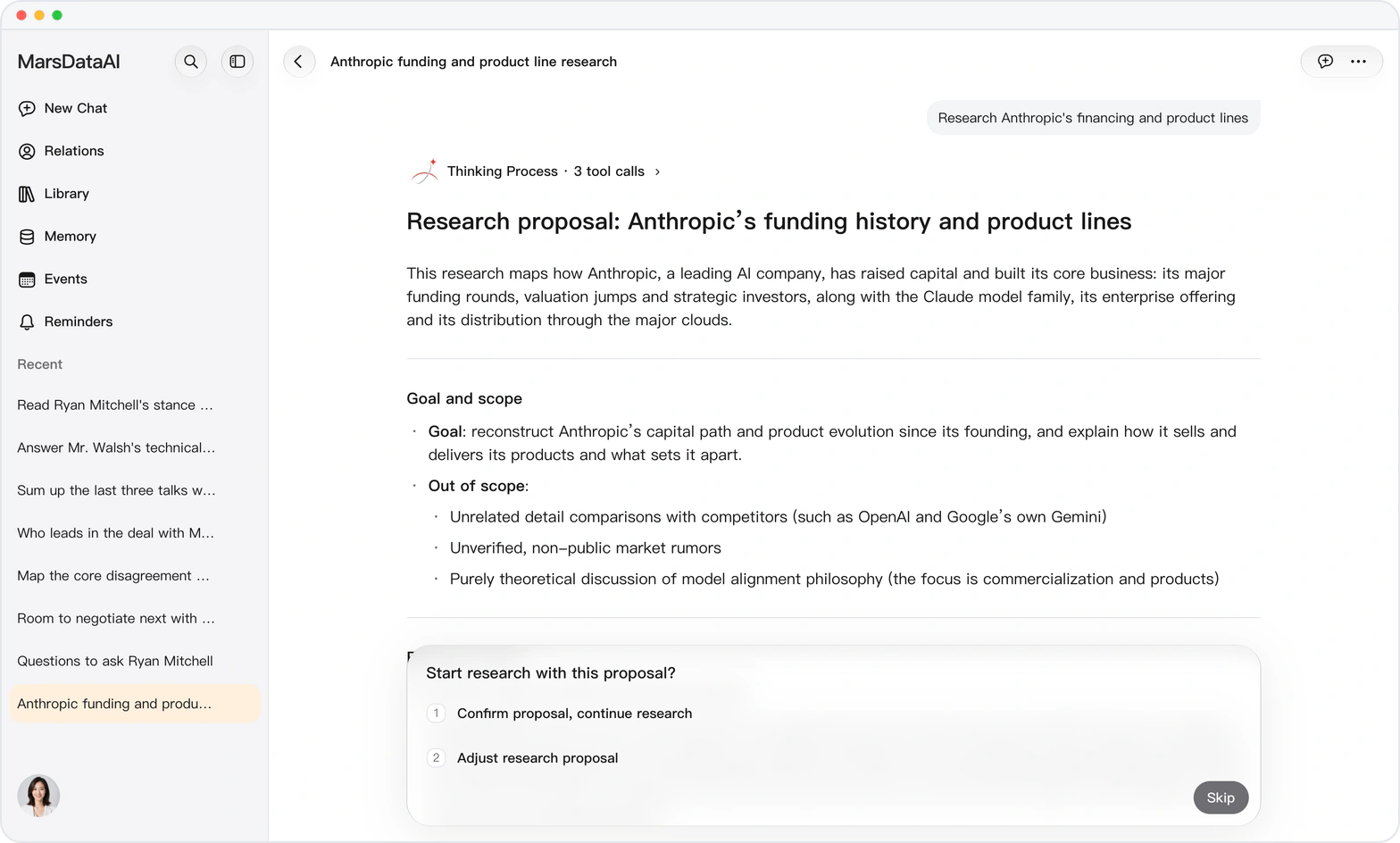
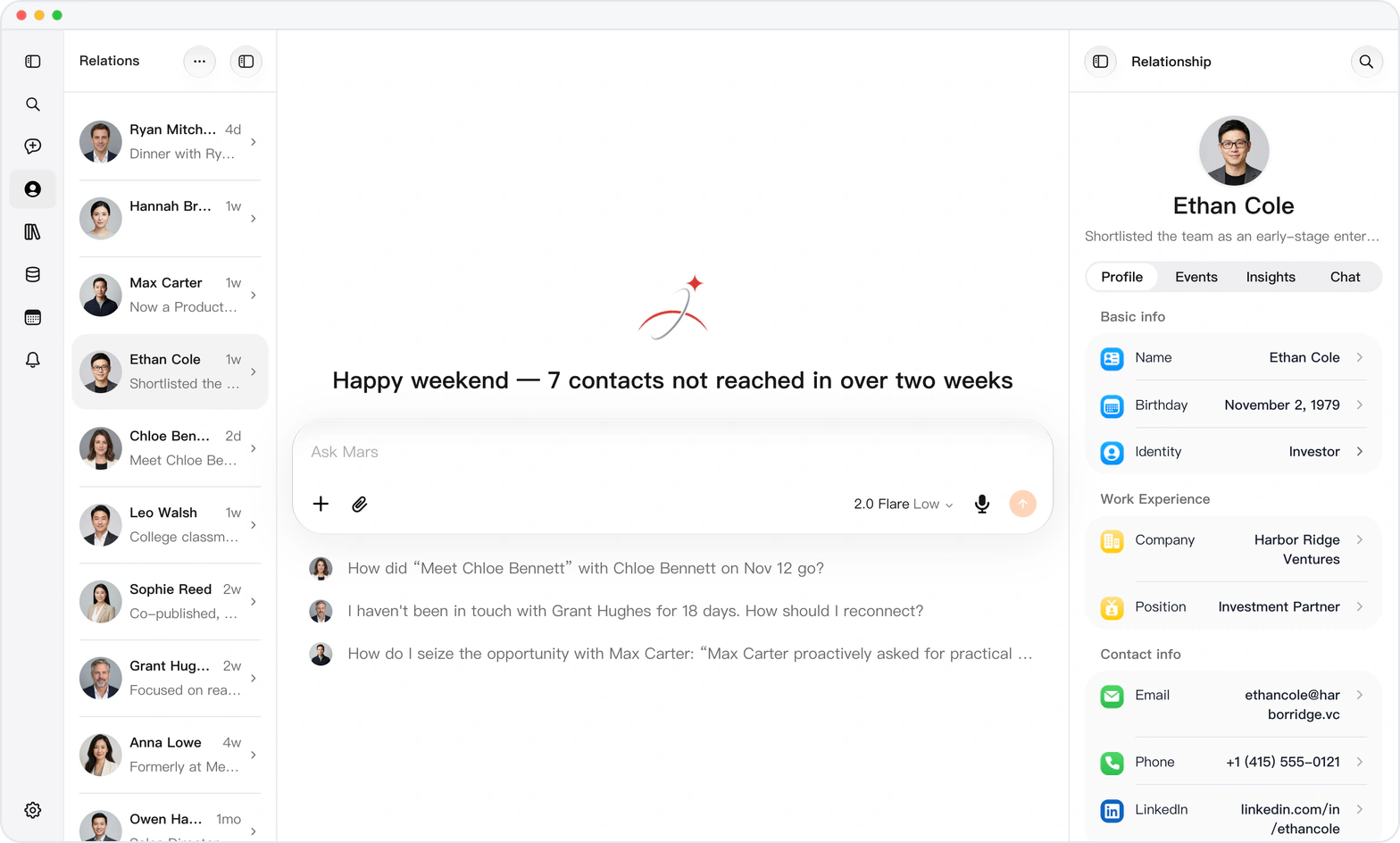
Most people start with a therapist directory, their health insurance's list of covered providers, an employee assistance program (EAP) at work, a community or faith-based counseling center, or a university training clinic, where supervised trainees often charge less. Online relationship counseling by video works for many couples and widens the choice beyond your town. Before booking, check that the counselor is licensed where you live, their approach (for example the Gottman method or emotionally focused therapy), fees, insurance or a sliding scale, language and waiting time. For a practice that shows up in a near-me search, confirm the license on your state licensing board's website (LMFT, LPC, LCSW or psychologist), then book the free 15-minute consultation call many practices offer and ask how they work with couples, how often you would meet and what happens if only one of you comes. Mars does not recommend or vet counselors, but its deep research does the comparing. For example, you live in a small town where the two local practices have long waitlists. Ask Mars to compare couples counselors licensed in your state who work online, take your insurance or offer a sliding scale, and have evening slots. Mars shows its research plan for you to confirm, searches public directories and practice websites in parallel, and returns one comparison in which every row links to its source, so you check the details before you call.
- Where to look: directories, your insurance list, an employer EAP, community centers and university training clinics
- Online sessions by video with a counselor licensed where you live
- A comparison from Mars deep research with every source linked; you confirm license and fees at the source
Relationship problems counselling: what it helps with, and how to name the real problem
Relationship problems counselling (counseling in US spelling) helps couples who keep hitting the same wall: talks that turn into fights or long silences, trust broken by an affair or a lie, money, intimacy, in-laws, or a big change such as a new baby, a move or a lost job. Counsellors see couples in person or online, together or one partner at a time. A first session usually asks what brings you in and what you have already tried, and it goes further when you can name the problem with examples instead of "we just keep fighting". For example, before booking you share six weeks of chats with your partner and ask Mars "What do we actually keep arguing about?" Mars groups the arguments into three recurring ones: who plans the weekends, money sent to his parents, and replies that stop for a day after a disagreement. It quotes the line that starts each one and dates them, and you take that list to the first session. Many people post the problem on an anonymous advice forum first, such as Reddit or the DCInside dating advice gallery in Korea (연애 상담 갤러리), where strangers answer from one or two screenshots and one side of the story. Sharing the same chats with Mars before you post sorts out what repeated and how often, with dates and quoted lines, and on request it drafts a summary without names or contact details. Mars is not a counsellor and does not diagnose. If you feel afraid of your partner, speak to a counsellor on your own first, and in an emergency call your local emergency number.
- The problems that keep coming back in your chats, grouped by topic with quoted lines and dates, ready for a forum post or a first session
- In person or online, together or alone: questions to ask a counsellor before you book
- What you agree to try saved with reminders, and hard messages drafted for you to send yourself
Relationship counseling NYC and Denver: compare couples counselors before you book
A search for relationship counseling in NYC returns hundreds of couples therapists across Manhattan, Brooklyn and Queens, with different approaches, fees, insurance and waitlists. Mars does not recommend or vet therapists, but its deep research does the legwork of comparing them. For example, ask Mars to compare couples counselors in Brooklyn who use the Gottman method or emotionally focused therapy, offer evening or online sessions and list a sliding scale. Mars shows its research plan for you to confirm, searches public directories and practice websites in parallel, and returns a comparison in which every link carries its page's real title, so you check licenses, fees and availability at the source before you call. Relationship counseling in Denver works the same way, with one Colorado detail: besides licensed marriage and family therapists (LMFT), professional counselors (LPC) and psychologists, Colorado lets unlicensed psychotherapists practise once they are listed in the state's DORA registry, so a profile that says "psychotherapist" does not always mean a license. For example, ask Mars to compare couples counselors in Capitol Hill, Cherry Creek or Washington Park, or online with a Colorado license, who take your insurance and have Saturday sessions. Mars lists each one's credential as the practice page states it and links the state's public license lookup beside it, so you see whether it is a license or a registration before you call. Once you book, Mars saves the first session as an event with a reminder and helps you write down what you want to work on.
- One comparison of counselors by approach, fees, insurance, format and neighborhood, every claim linked to its source
- In Denver and the rest of Colorado, a license (LMFT, LPC, psychologist) told apart from an unlicensed psychotherapist registration
- You confirm the research plan first, and you verify credentials on the practice's own page
- First-session prep: what you want to change, recent examples and questions to ask the counselor
Premarital counseling near me: pick a program, then talk through the pre marriage counseling questions
Pre marriage counseling questions cover what couples most often clash over later: money and debt, children, where to live, careers, boundaries with each family, faith and values, chores, intimacy and how you handle conflict. Finding a list is easy; the hard part is noticing where your answers really differ and remembering what you agreed. Ask Mars for a premarital question list by topic, go through it together over a few evenings and tell Mars your answers. Mars keeps your partner's answers on their record, in groups such as Family and Mindset & Preferences, keeps yours in your own memory, and points out the gaps. For example, you both say you want children, but one of you says "in a year or two" and the other "once we own a home". Mars flags that the timing is still open and suggests a follow-up question to take to your premarital counselor. To find premarital counseling near you, search a therapist directory by city or zip code, ask your place of worship whether it runs a premarital program, and shortlist two or three, online courses included. For example, you paste the links of a local marriage and family therapist, a church program and an online course and ask Mars "Which premarital counseling fits us before our June wedding?" Mars lists each one's number of sessions, price, in-person or online format and whether it uses an assessment such as PREPARE/ENRICH or SYMBIS, each with the page it came from. In some states, such as Florida and Texas, an approved premarital course also lowers the marriage license fee; your county clerk confirms which courses count.
- A premarital question list by topic: money, children, family, careers, faith, conflict and intimacy
- Both partners' answers saved after the talk, so what you agreed is not lost
- Differences flagged with a follow-up question, ready for your counselor or officiant
- Local and online premarital programs compared side by side, each fact with its source
Military OneSource marriage counseling: get more out of every free session
Military OneSource offers eligible service members and their families free, confidential, short-term non-medical counseling, and relationship and marriage challenges are among the topics it covers, in person, by phone, by secure video or by online chat. Short sessions help most when you arrive with specifics rather than "we keep fighting". Mars keeps the record between sessions: what was said, when, and what each of you agreed to try. Before the next session, ask Mars to prepare you. For example, you have a phone session on Thursday about the arguments since your spouse came back from deployment. Mars gathers the three arguments you told it about this month, quotes the line that keeps coming back ("you decide everything without me"), checks whether last session's plan to set weekends together held, and turns it into a short brief you read before the call. Afterwards you tell Mars what the counselor suggested, and it sets a reminder for the exercise. Mars is an independent app, not affiliated with Military OneSource or the Department of Defense, and it does not provide counseling.
- A short brief before each session: the recurring issue, the words that keep coming back and what changed since last time
- What you agreed to try in the session saved, with reminders so it actually happens
- Eligibility and booking stay with Military OneSource; Mars helps you prepare and follow through
Marriage counseling near me: how to choose a counselor, and where to find affordable marriage counseling
Marriage counseling in private practice in the US often costs about $75 to $250 a session, and most couples need several sessions, so cost decides whether many couples start at all. Affordable marriage counseling near you usually comes from five places: your health insurance (couples sessions are not always covered, so ask), an employee assistance program (EAP) at work with a few free sessions, university marriage and family therapy training clinics, where supervised trainees charge on a sliding scale that is often well under $100, community and faith-based counseling centers, and therapists who list a sliding scale in directories such as Psychology Today or Open Path Collective. For example, you have three nearby practices open in your browser and cannot tell which fits your budget. Paste the three links into Mars. It reads each practice's public fees page as a signed-out visitor and lists the fee per session, whether it offers a sliding scale or takes insurance, and whether it has evening or online sessions, with every line linked to the page it came from. Mars does not vet counselors, so confirm the fee with the practice before you book. Cost is only one filter. A search for marriage counseling near me shows dozens of practices on the map, so narrow them by what decides whether you will both keep going: a licensed marriage and family therapist (LMFT) or a counselor with couples training, evening or weekend hours that fit both schedules, in person within a short drive or by video, and how long the waitlist is. For example, you both work until six and one of you travels every other week. Tell Mars that and paste the five practices you found. Mars marks which ones list evening hours, offer video sessions for the travel weeks and say they have openings now, drafts five questions for the free 15-minute consultation call most practices offer, and sets a reminder to call on Monday morning.
- Marriage counseling near me narrowed by what keeps you both going: couples training, evening hours, distance or video, and the waitlist
- Five places to look: insurance, an employer EAP, university training clinics, community centers and sliding-scale directories
- Fees, sliding scale, insurance and session format read from each practice's public page, every line linked
- You confirm the fee and the counselor's license with the practice before booking
Is marriage counseling worth it? What research says, and how to tell if it is working
Research on couples therapy is encouraging but not a guarantee. The best-known figure comes from a 1999 meta-analysis of emotionally focused couple therapy, in which about 70 to 73 percent of distressed couples recovered, meaning the relationship moved out of the distressed range; it does not mean every couple stayed together. Counseling tends to help most when both partners take part willingly, start before resentment hardens and practise between sessions. It helps less when one partner has already decided to leave, and when there is ongoing abuse, individual support comes first. Whether it is worth it for you depends on whether things change, and Mars helps you see that. For example, after six sessions you are not sure anything is different. Ask Mars "Are we fighting less since counseling started?" It compares the chats you shared from before the first session with the weeks since: how often arguments started, how long the silences after them lasted, and whether the repair line your counselor suggested ("Can we start that again?") shows up, quoting each example with its date. You take that comparison to your next session.
- What research supports: in emotionally focused therapy studies most distressed couples recovered
- Before and after counseling compared in your own chats, each change quoted with its date
- If you feel unsafe with your partner, get individual help first
Couple counseling and couples therapy: what happens, Gottman method couples therapy and other main methods, and how they differ
Couples therapy and couples counseling overlap so much that many therapists use the words interchangeably: a licensed professional works with both partners on a pattern that keeps hurting the relationship. "Therapy" is more often used when the work goes deeper or lasts longer, for example after an affair, or when one partner's anxiety, depression or past trauma shapes every argument. Most couples therapists follow a named method. The Gottman method begins with an assessment, usually questionnaires and separate conversations with each partner, and then practises skills such as raising a complaint gently instead of opening with criticism. Emotionally focused therapy (EFT) looks for the cycle under the fights, such as one partner pursuing and the other withdrawing, and often runs about 8 to 20 sessions. For example, your therapist asks you to notice how your arguments start. Share the chats from the last month and ask Mars "How do our arguments begin?" Mars quotes the first message of each argument with its date and marks which ones open with a criticism of the person ("you never listen") and which with a request ("can we talk about Saturday?"), so you bring real examples to the next session instead of trying to remember them. Couple counseling also works better when what you agree in a session survives the week: after each session, tell Mars the one thing you both agreed to try, such as a ten-minute check-in on Sunday evenings, and it saves the agreement with a mid-week reminder and, before the next session, lists the days you kept it and the days an argument started instead. Gottman method couples therapy, developed by psychologists John and Julie Gottman, usually opens with a joint session, an individual session with each partner and online questionnaires, then works on friendship, managing conflict and shared meaning, with exercises to practise at home; trained therapists are listed in the Gottman Institute's referral directory and in therapist directories that filter by method. For example, the assessment asks each of you to tell the story of the relationship and its hardest stretch. Ask Mars for a timeline from the chats you have shared: it lists the date of the move, the weeks of short replies and the make-up after each fight, quoting the messages, so your individual session starts from what happened rather than from the last argument. Mars does not provide therapy or diagnose anything; it only shows what is in the messages you share.
- Couples therapy and couples counseling overlap; therapy often goes deeper or also covers one partner's mental health
- Common methods: the Gottman method and emotionally focused therapy (EFT), often about 8 to 20 sessions
- How each argument starts in your chats, quoted with its date, ready for your therapist's questions
Marriage couple counseling and marriage relationship counseling: who to see, and which license to check
Searches such as marriage couple counseling, marriage relationship counseling and marriage counselor therapy lead to the same question: who should you see? In the US, licensed marriage and family therapists (LMFT) are trained specifically to work with couples and families. Licensed professional counselors (LPC or LMHC), clinical social workers (LCSW) and psychologists (PhD or PsyD) also see couples, often with extra training in a couples method. A title on a website does not tell you which license someone holds, and "relationship coach" is not a licensed profession at all, so check the license itself: every state licensing board has a free public lookup that shows whether a license is active and lists any disciplinary actions. For example, you have shortlisted four marriage counselors and cannot tell their credentials apart. Ask Mars to compare them. Mars shows its research plan for you to confirm, reads each counselor's public profile and practice page, and returns one table with the license type, the state, whether they say they work with couples and their method, with the source of every line linked and the state board's lookup page next to it. Once you choose, the first session goes further with specifics: married couples often bring an argument that has run for years, such as who handles the money since the second child was born, and Mars groups the lines from your shared chats where it comes back into a one-page brief with dates, for you to edit and take along. Mars does not vet counselors, so confirm the license on the board's own site before you book.
- LMFTs are trained specifically in couples work; LPCs, LMHCs, LCSWs and psychologists may also see couples
- A title alone is not a license: check the state board's free public lookup before booking
- Your shortlist compared by license, couples experience, method and format, every line linked to its source
Online therapy for couples: how video and message sessions work
Online therapy is talk therapy by video, phone or written messages instead of an office visit. For couples it removes the hardest part of booking: finding one hour when both partners and the therapist are free in the same place. Partners can even join one video session from two cities. In the US a therapist must be licensed in the state where you live when the session happens, so an online directory or platform first asks for your state. Message-based plans let you write to your therapist during the week and get replies within a set time; video sessions feel closest to an office visit. Online therapy is not for a crisis: in the US, call or text 988 or call 911. For example, you and your partner start weekly video sessions and your therapist asks what happened since last time. Before each session, ask Mars "What changed in our chats this week?" Mars lists the week's arguments and repairs with their dates and quotes, and how they compare with the week before, so the hour starts with what actually happened instead of who remembers it better. Mars is not a therapist; it only reads the messages you choose to share.
- Video, phone or message sessions; partners can join one video session from two places
- The therapist must be licensed in your state; online therapy is not for a crisis (in the US, call or text 988)
- A dated summary of the week's arguments and repairs from your chats, ready before each session
BetterHelp therapy and other online platforms: what to compare before you subscribe
Better help therapy usually means BetterHelp, the largest US online therapy platform. You answer a questionnaire, get matched with a licensed therapist and pay a weekly price billed every four weeks; it generally does not take insurance. BetterHelp itself is for individuals. Couples are sent to Regain, its sister service, where one subscription covers both partners. Talkspace accepts some insurance plans, and many local therapists also offer video sessions, sometimes on a sliding scale. Read each platform's privacy policy: in 2023 the US Federal Trade Commission ordered BetterHelp to pay $7.8 million over sharing users' health information for advertising. For example, you cannot decide between Regain, Talkspace and two local couples therapists who work online. Ask Mars to compare them. Mars shows its research plan for you to confirm, reads each provider's public pricing, insurance and privacy pages, and returns one table with price per month, insurance, couples sessions, session format and how you can switch therapists, with every line linked to its source. Prices change often, so confirm on the provider's own site before you pay.
- BetterHelp is for individuals; couples go to its sister service Regain, one subscription for both
- Compare price per month, insurance, couples sessions, format and the privacy policy
- One table of your shortlist from public pages, every line linked to its source
LDS marriage counseling: Family Services, faith-based therapists and what to ask
LDS marriage counseling is counseling that respects the faith of members of The Church of Jesus Christ of Latter-day Saints. There are two main routes. Family Services (formerly LDS Family Services) is the Church's own counseling service in some areas; members are often referred by their bishop, and you can also contact an office directly. The other route is a licensed therapist who shares or understands the faith, found through therapist directories that filter by religion or through recommendations. Some couples worry about privacy when a church leader is involved: before you start, ask the counselor what, if anything, is shared with your bishop and only with your written consent. A temple marriage, church attendance, a faith transition of one partner or expectations from both families often come up. For example, you and your spouse keep arguing about how much time each Sunday goes to church callings and how much to family. Before your first appointment, ask Mars to prepare a brief from the chats you share: the dates of those arguments, what each of you asked for in your own words, and two questions to bring to the counselor. Mars does not give religious or clinical advice.
- Two routes: the Church's Family Services, often by a bishop's referral, or a licensed faith-aware therapist
- Ask before you start what is shared with your bishop, and only with your written consent
- A brief of your recurring arguments with dates and each partner's own words, ready for the first appointment
Relationship therapist: what they do, and what to tell one before the first session
A relationship therapist is a licensed mental health professional who works with one or both partners on the patterns that keep a relationship stuck: the same argument on repeat, broken trust, growing distance or a decision about whether to stay. In the US that is usually a licensed marriage and family therapist (LMFT), a licensed professional counselor (LPC), a clinical social worker (LCSW) or a psychologist. Sessions last about 50 minutes, weekly or every other week, in person or by video, and the first one is mostly questions: what brings you in, how long it has been going on and what you have already tried. Many practices ask the same in an intake form before you book. For example, a relationship therapist you are considering asks you to describe "the main concern" in a few lines, and you do not know where to start. Ask Mars to go through the chats you saved and name the two or three conflicts that come back most often, each with its dates and a quoted line from both of you. Mars drafts a short intake note in a card; you edit it, copy it and paste it into the therapist's form yourself. Mars is not a therapist and does not diagnose; if you feel unsafe, contact a professional or emergency services first.
- Who counts as a relationship therapist: an LMFT, LPC, LCSW or psychologist with an active state license
- What the first session asks: the main concern, how long it has lasted and what you have tried
- An intake note drafted from your own chats, with dates and quoted lines, that you edit and send yourself
Individual relationship counseling: working on a relationship on your own
Individual relationship counseling means seeing a counselor or therapist on your own about a relationship, rather than as a couple. People choose it when a partner will not come to couples counseling, when they want a private space to decide whether to stay, or when the same pattern keeps repeating from one relationship to the next. The focus is your side: what you feel, how you react and what you can change, because a counselor cannot change a partner who is not in the room. In the US, university counseling centers, employee assistance programs (EAP) and licensed therapists offer it, in person or by video. For example, your partner has turned down couples counseling twice, and you book an individual session to work out what to do. Ask Mars for a pre-session brief: it goes through the chats you saved, lists the three arguments that came back most often with their dates, quotes how you responded each time and notes the question you want help with, such as "how do I bring up money without it turning into a fight". You edit the brief and take it to the session yourself. Mars is not a counselor; if you feel unsafe, contact a professional or emergency services first.
- When it fits: a partner who will not attend, a decision you want to make privately, or a pattern that repeats
- It works on your own reactions and choices, not on changing a partner who is not in the room
- A pre-session brief from your own chats, with dates and quoted lines, that you edit and bring yourself
Use Mars around relationship counseling
- Name the problemShare the chats that matter and ask what keeps coming back.
- Find a counselorCompare counselors near you or online with cited deep research.
- Follow throughTurn what you agree in each session into reminders and drafts.
See the rest of Use cases in MarsDataAI Wiki.