Why text messages are misread, and what reading the subtext takes
Mars Research · November 3, 2026
Abstract
A text message can be read in a way its writer never meant. This article reviews four bodies of evidence. First, writers overestimate how well their tone comes across in text, and readers are confident in readings that are often wrong (Kruger et al., 2005; Riordan & Trichtinger, 2017; Byron, 2008). Second, much of what people mean is conveyed indirectly, and how readily people look for indirect meaning differs between individuals and cultures (Holtgraves, 1998; Holtgraves, 1997). Third, small cues such as a final period, an emoji or the time a reply takes carry meaning, but the same cue is read differently by different people (Gunraj et al., 2016; Miller et al., 2016; Kalman & Rafaeli, 2011). Fourth, closeness makes people overestimate how well they are understood (Savitsky et al., 2011), and friends read e-mail no more accurately than strangers (Riordan & Trichtinger, 2017). From this we infer, as a conclusion of this article rather than a reported finding, that shared history helps only when it is explicit and actually used. On this evidence, Mars works as a text message analyzer: it reads a pasted or uploaded chat screenshot as a whole, states the tone, the subtext and what the other person is asking for, points to the lines that support each reading, and notes what changed compared with earlier conversations you saved. We also state the limits of this evidence: inferring emotion from any signal is uncertain (Barrett et al., 2019), and the work supports the design direction without testing Mars itself.
Keywords: text message analyzer · computer-mediated communication · emoji · egocentrism
1. Introduction
Much of everyday contact now happens in text. Yet the channel matters: in a field experiment in which participants reconnected with an old friend by phone or e-mail, and in laboratory chats with strangers over video, voice or text, interactions that included voice created stronger social bonds than text-based ones, with no increase in awkwardness (Kumar & Epley, 2021). Within text, emotion is not absent, but it is easily misread; a theoretical analysis of workplace e-mail argues that receivers often read messages as more negative or more neutral than the sender intended (Byron, 2008).
This article asks why text messages are misread, which cues readers use to recover what is not said, and what a tool that helps people read a message would need to do.
Method: this is a narrative literature review drawing on pragmatics, computer-mediated communication and emotion research. We favoured peer-reviewed experiments, large observational datasets and reviews accessible through a DOI, and included work that limits popular claims. Every finding carries its source; sentences that draw an inference from the findings are ours and say so. The full reference list with original links follows the article.
2. Writers overestimate how clearly their tone comes across
A popular view holds that text is a cold medium that strips emotion out. A review of empirical work found no indication that computer-mediated communication is less emotional or less personally involving than face-to-face contact; emotional communication online and offline was surprisingly similar, and where differences appeared, emotion was communicated more often and more explicitly online (Derks et al., 2008). On our reading, the difficulty lies less in expressing emotion than in reading it.
Across five experiments (12 and 60 Cornell University students in Studies 1 and 2, the latter with a final sample of 29 dyads; 154 pairs of University of Illinois students in Study 3; 54 and 58 University of Illinois students in Studies 4 and 5), Kruger and colleagues found that people believe they can communicate over e-mail more effectively than they actually can, and traced this overconfidence to egocentrism: writers “hear” their own statement as sarcastic or funny because they intend it that way, and find it hard to appreciate that the reader may not (Kruger et al., 2005). Three later experiments measured both sides of e-mail exchanges: writers and readers were highly confident, but the confidence was partly unwarranted given their accuracy, and writers expected friends to read them correctly more than strangers although friends were no more accurate (Riordan & Trichtinger, 2017).
On this evidence, Mars does not stop at a verdict on tone. When you paste or upload a chat screenshot, it states the tone and intent in plain words, with the lines that support each reading, so a reading can be checked against the chat itself rather than accepted on confidence (Kruger et al., 2005; Riordan & Trichtinger, 2017).
3. Much of what is meant is not said
Pragmatics distinguishes what a sentence says from what a speaker means by it. Holtgraves proposed, on the basis of Grice’s conversational logic and Goffman’s work on face, that when a reply seems irrelevant to the question, hearers infer a meaning that explains why the speaker answered that way. In three experiments, such replies were generally read as conveying a nonliteral meaning, usually negative information that would have been face-threatening to state directly; when face management was removed as a reason, the same replies became much more ambiguous and harder to understand (Holtgraves, 1998).
People also differ in how they use indirectness. Holtgraves developed a measure of how indirectly people phrase their own remarks and how much they look for indirect meanings in others’ remarks: Korean participants were more likely than American participants to speak indirectly and to look for indirect meanings, and people who scored high comprehended certain indirect meanings more readily and more quickly (Holtgraves, 1997). We infer that the same reply can carry a clear request for one reader and none for another.
Building on this work, Mars reads not only what a message says but the subtext and what the other person is asking for, and lists the requests, promises and dates the other person mentioned (Holtgraves, 1998; Holtgraves, 1997).
4. Small cues carry meaning, and are read differently
Text does carry nonverbal information. Emoticons, though typed as characters, perform nonverbal communication functions; Lo called them quasi-nonverbal cues (Lo, 2008). In two experiments, text messages carrying emojis of objects, not faces, were read as communicating positive affect, specifically joy (Riordan, 2017). Punctuation matters as well: replies ending in a period were judged less sincere in text messages, a difference that did not appear in handwritten notes (Gunraj et al., 2016).
Time is a cue too. An experiment that altered the time stamps of e-mail messages found that the time of day a message was sent and the delay until a reply interacted with whether the message was task-oriented or socioemotional to shape perceived intimacy, liking and dominance (Walther & Tidwell, 1995). Across more than 150,000 responses in three datasets, response latencies followed a power-law distribution: at least 70% of responses came within the responder’s average latency, and at most 4% came after more than ten times that average (Kalman et al., 2006). When managers evaluated job candidates who replied after one day, after two weeks or not for over a month, the effect of the delay on evaluations depended on how rewarding the candidate otherwise appeared (Kalman & Rafaeli, 2011).
These cues are not fixed codes. In an online survey of interpretations of popular emoji, people who saw the same rendering disagreed on whether its sentiment was positive, neutral or negative 25% of the time, and disagreement grew when renderings differed across platforms (Miller et al., 2016). On our reading, a cue is informative only alongside the words, the relationship and the usual rhythm of the exchange.
Following this research, Mars reads the whole screenshot rather than a single line, so a short reply, a late answer or an emoji where words used to be is read together with what the screenshot shows: the messages before and after it and the times at which they were sent (Gunraj et al., 2016; Miller et al., 2016; Kalman & Rafaeli, 2011). A single screenshot does not show the usual rhythm of an exchange, so that part of the context is not available to Mars from the image; what it can add is what changed compared with earlier conversations you saved. Mars reads the image itself, so screenshots from any messaging app work.
5. Shared history helps only when it is used
It is natural to assume that people who know each other understand each other’s messages better. Savitsky and colleagues found the reverse bias: listeners following a friend’s directions (University of Chicago undergraduates, 96 as addressees and 48 as directors) made more egocentric errors than those following a stranger’s, and speakers using ambiguous phrases (60 Williams College students in well-acquainted mixed-sex couples, and 24 married couples married 14.4 years on average) overestimated their success more with a friend or spouse than with strangers. They argue that people monitor a stranger’s perspective because they know they must, but “let down their guard” with a friend (Savitsky et al., 2011). In e-mail, friends were no more accurate readers than strangers despite writers’ higher confidence, and the authors conclude that reliance upon friendship and context, as well as verbal and nonverbal cues, to interpret emotion in e-mail is ineffective and sometimes detrimental (Riordan & Trichtinger, 2017). That conclusion limits this section’s thesis: knowing the person, or the situation, did not by itself make readers more accurate.
Walther’s review of computer-mediated communication described how text exchanges can be impersonal, interpersonal or “hyperpersonal”, surpassing ordinary interpersonal levels, and discussed processes in receivers, senders, the channel and feedback that may enhance impressions and relations (Walther, 1996). What a reader concludes from a message therefore depends on what the reader brings to it, not only on what the sender wrote. We infer from these results, as a conclusion of this article rather than a finding of either study, that history can help a reader only when it is explicit, such as what was actually said and agreed before, and not when it is a general sense of knowing the person; the studies above show that the general sense does not help, and none of them tests the explicit form.
Mars therefore does not ask you to rely on a sense of the relationship. It notes what changed compared with earlier conversations you saved, and drafts a reply from what you already know about the person: past conversations, what you agreed, what they care about. The people in a screenshot become relationship records and the plans in it become events with reminders, so the history that a later reading relies on is written down rather than assumed. This differs from the context reliance that Riordan and Trichtinger found ineffective in one respect: the comparison is with recorded messages and agreements, not with a feeling of knowing the person. Whether that difference makes a reading more accurate has not been tested, as section 7 notes (Savitsky et al., 2011; Riordan & Trichtinger, 2017).
6. From evidence to design
These findings point to one conclusion: a tool that helps people read a message must show its grounds, look for what is meant but not said, read small cues in their context and use the history between two people explicitly. Mars meets each requirement as follows. The figure shows the conversation composer, where a chat screenshot is pasted or uploaded; it is the entry point for the reading, not the reading itself:
- Confidence outruns accuracy → readings that point to their linesDrop in a screenshot of any chat, on the web, iPhone or Mac, and ask your question. Mars explains the most likely meaning, tone and request in a message and points to the lines that support it. It is a second opinion grounded in the chat, not a mind reader, so you decide what to do with it (Kruger et al., 2005; Riordan & Trichtinger, 2017).
- Meaning is often indirect → subtext and requests made explicitMars reads the tone, the subtext and what the other person is asking for, and lists the requests, promises and dates the other person mentioned (Holtgraves, 1998; Holtgraves, 1997).
- Small cues are ambiguous alone → the whole screenshot, not one lineMars looks at the whole screenshot and explains what the other person is likely feeling and asking for, reading a short reply, a late answer or an emoji with the messages before and after it and the times the screenshot shows (Gunraj et al., 2016; Miller et al., 2016; Kalman & Rafaeli, 2011).
- Closeness is not shared understanding → saved history used explicitlyMars notes what changed compared with earlier conversations you saved and drafts a reply from your past conversations and what you agreed; the people in a screenshot become relationship records and its plans become events with reminders. Nothing is sent for you: you edit the draft and send it yourself (Savitsky et al., 2011; Riordan & Trichtinger, 2017).
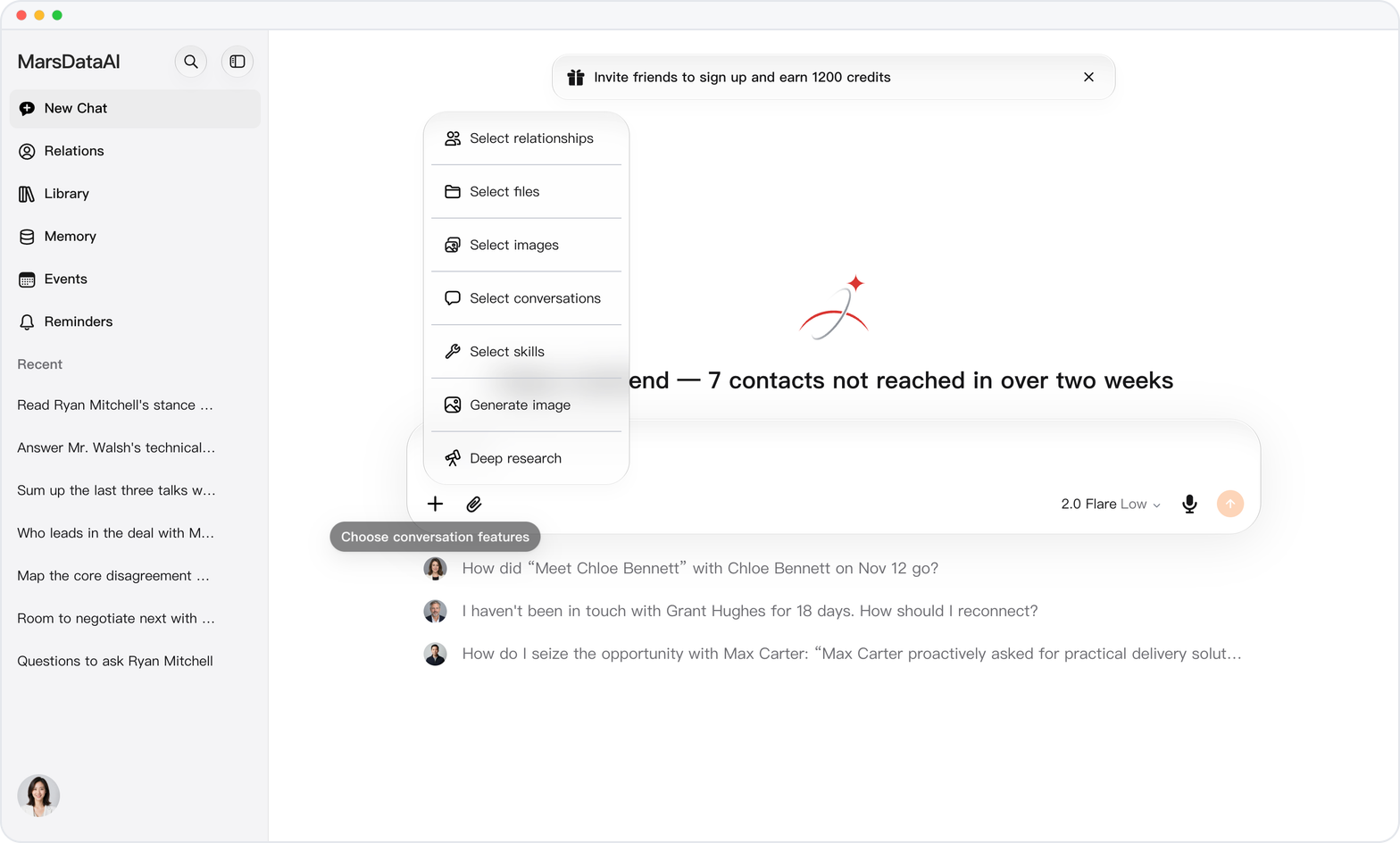
Figure 1. How to use an AI assistant app with recordings
7. Limitations
First, the studies cited here test how people write and read messages, not Mars itself. They support our design direction but do not show that Mars reads messages more accurately than people do; that needs its own evaluation. In particular, Riordan and Trichtinger found that relying on friendship and context to interpret emotion in e-mail was ineffective and sometimes detrimental (Riordan & Trichtinger, 2017); our claim that comparing a message with recorded earlier conversations differs from that kind of context is an inference of this article, not a tested result.
Second, inferring emotion from any signal is uncertain. A major review of facial expressions found that people do smile when happy or scowl when angry more often than chance, but that how emotions are expressed varies substantially across cultures, situations and people, and that the same configuration of facial movements can express more than one emotion or none (Barrett et al., 2019). That review concerns faces, not text, but its caution applies to any claim that a feeling can be read off a signal. A reading of a message is a probability, which is why Mars states its grounds and leaves the decision to you.
Third, the samples are specific: e-mail exchanges in laboratory experiments (Kruger et al., 2005; Riordan & Trichtinger, 2017), University of Chicago undergraduates, Williams College students and 24 married couples (Savitsky et al., 2011), Korean and American participants (Holtgraves, 1997), managers judging job candidates (Kalman & Rafaeli, 2011) and an online survey on emoji renderings (Miller et al., 2016). Several studies predate today’s messaging apps (Walther & Tidwell, 1995; Walther, 1996), and one key account of emotional miscommunication is a theoretical framework rather than an empirical test (Byron, 2008).
Fourth, a closer reading of text is not always the best remedy. Voice-based interactions created stronger bonds than text without more awkwardness (Kumar & Epley, 2021), so some misunderstandings may be better settled by a call than by another message.
8. Conclusion
Text messages are misread less because they lack emotion than because writers overestimate their clarity, much meaning is indirect, small cues are ambiguous and closeness breeds false confidence. The research points to readings that show their grounds, attention to what is asked but not said, cues read in context and history used explicitly. Mars reads chat screenshots in this way: it states the tone, the subtext and the requests, points to the supporting lines, compares with earlier conversations you saved and turns people and plans into relationship records and events.
References
Listed in APA 7th edition style, each with its original DOI link.
- Barrett, L. F., Adolphs, R., Marsella, S., Martinez, A. M., & Pollak, S. D. (2019). Emotional expressions reconsidered: Challenges to inferring emotion from human facial movements. Psychological Science in the Public Interest, 20(1), 1–68. https://doi.org/10.1177/1529100619832930
- Byron, K. (2008). Carrying too heavy a load? The communication and miscommunication of emotion by email. Academy of Management Review, 33(2), 309–327. https://doi.org/10.5465/amr.2008.31193163
- Derks, D., Fischer, A. H., & Bos, A. E. R. (2008). The role of emotion in computer-mediated communication: A review. Computers in Human Behavior, 24(3), 766–785. https://doi.org/10.1016/j.chb.2007.04.004
- Gunraj, D. N., Drumm-Hewitt, A. M., Dashow, E. M., Upadhyay, S. S. N., & Klin, C. M. (2016). Texting insincerely: The role of the period in text messaging. Computers in Human Behavior, 55, 1067–1075. https://doi.org/10.1016/j.chb.2015.11.003
- Holtgraves, T. (1997). Styles of language use: Individual and cultural variability in conversational indirectness. Journal of Personality and Social Psychology, 73(3), 624–637. https://doi.org/10.1037/0022-3514.73.3.624
- Holtgraves, T. (1998). Interpreting indirect replies. Cognitive Psychology, 37(1), 1–27. https://doi.org/10.1006/cogp.1998.0689
- Kalman, Y. M., & Rafaeli, S. (2011). Online pauses and silence: Chronemic expectancy violations in written computer-mediated communication. Communication Research, 38(1), 54–69. https://doi.org/10.1177/0093650210378229
- Kalman, Y. M., Ravid, G., Raban, D. R., & Rafaeli, S. (2006). Pauses and response latencies: A chronemic analysis of asynchronous CMC. Journal of Computer-Mediated Communication, 12(1), 1–23. https://doi.org/10.1111/j.1083-6101.2006.00312.x
- Kruger, J., Epley, N., Parker, J., & Ng, Z.-W. (2005). Egocentrism over e-mail: Can we communicate as well as we think?. Journal of Personality and Social Psychology, 89(6), 925–936. https://doi.org/10.1037/0022-3514.89.6.925
- Kumar, A., & Epley, N. (2021). It’s surprisingly nice to hear you: Misunderstanding the impact of communication media can lead to suboptimal choices of how to connect with others. Journal of Experimental Psychology: General, 150(3), 595–607. https://doi.org/10.1037/xge0000962
- Lo, S.-K. (2008). The nonverbal communication functions of emoticons in computer-mediated communication. CyberPsychology & Behavior, 11(5), 595–597. https://doi.org/10.1089/cpb.2007.0132
- Miller, H. J., Thebault-Spieker, J., Chang, S., Johnson, I., Terveen, L., & Hecht, B. (2016). “Blissfully happy” or “ready to fight”: Varying interpretations of emoji. Proceedings of the International AAAI Conference on Web and Social Media, 10(1), 259–268. https://doi.org/10.1609/icwsm.v10i1.14757
- Riordan, M. A. (2017). Emojis as tools for emotion work: Communicating affect in text messages. Journal of Language and Social Psychology, 36(5), 549–567. https://doi.org/10.1177/0261927X17704238
- Riordan, M. A., & Trichtinger, L. A. (2017). Overconfidence at the keyboard: Confidence and accuracy in interpreting affect in e-mail exchanges. Human Communication Research, 43(1), 1–24. https://doi.org/10.1111/hcre.12093
- Savitsky, K., Keysar, B., Epley, N., Carter, T., & Swanson, A. (2011). The closeness-communication bias: Increased egocentrism among friends versus strangers. Journal of Experimental Social Psychology, 47(1), 269–273. https://doi.org/10.1016/j.jesp.2010.09.005
- Walther, J. B. (1996). Computer-mediated communication: Impersonal, interpersonal, and hyperpersonal interaction. Communication Research, 23(1), 3–43. https://doi.org/10.1177/009365096023001001
- Walther, J. B., & Tidwell, L. C. (1995). Nonverbal cues in computer-mediated communication, and the effect of chronemics on relational communication. Journal of Organizational Computing, 5(4), 355–378. https://doi.org/10.1080/10919399509540258
Cite this article
Mars Research. (2026). Why text messages are misread, and what reading the subtext takes. MarsDataAI. https://marsdata.ai/research/reading-subtext-in-messages