Why starting is the hardest part: procrastination, reminders and start-up cost
Mars Research · November 3, 2026
Abstract
People do not always do what they intend to do (Sheeran & Webb, 2016). This article reviews four bodies of evidence on why starting a task is hard and what helps it begin. First, procrastination is most consistently linked to task aversiveness, task delay and impulsiveness, and it trades short-term relief for later costs (Steel, 2007; Tice & Baumeister, 1997; Sirois & Pychyl, 2013). Second, intentions for the future are often lost at the moment to act, and external reminders set in advance improve their fulfilment (Einstein & McDaniel, 1990; Gilbert, 2015; Rogers & Milkman, 2016). Third, in field experiments, a prompt to write down the date and time of a planned vaccination raised the vaccination rate by 4.2 percentage points (Milkman et al., 2011), plain reminder messages increased savings commitment attainment and substantially increased gym attendance (Karlan et al., 2016; Calzolari & Nardotto, 2017), and text messages before a doctor’s visit raised flu vaccination by an average of 5% (Milkman et al., 2021). Fourth, defaults show that when an action happens unless people intervene, inertia works for it, although the size of such effects is contested (Madrian & Shea, 2001; Jachimowicz et al., 2019; Maier et al., 2022). On this evidence, the Mars reminder app lets a reminder carry a prompt that it starts running in a new conversation at the set time, saves the meetings you mention in chat as events, and sends event alerts to your bound WeChat. We also state the limits of this evidence: it supports the design direction and is not an experimental test of Mars itself.
Keywords: reminder app · procrastination · prospective memory · default effects
1. Introduction
Procrastination has costs. In two longitudinal studies of students, procrastinators reported less stress and illness than others early in the semester but more late in the term, were sicker overall, and received lower grades on all assignments (Tice & Baumeister, 1997). A meta-analytic review described procrastination as a prevalent form of self-regulatory failure whose prevalence appears to be growing (Steel, 2007). More broadly, research on intention–behaviour relations converges on the conclusion that people do not always do the things they intend to do (Sheeran & Webb, 2016).
This article asks why the start of a task is so often where an intention fails, which conditions help a planned action actually begin, and how those answers translate into the design of an assistant that handles reminders.
Method: this is a narrative literature review. We favoured peer-reviewed work accessible through a DOI, and preferred meta-analyses, longitudinal studies and randomized field experiments. Where a popular claim is contested we cite the critique, and where a correction was published we use the corrected figures. Every finding carries its source; sentences that draw an inference from the findings are ours and say so. The full reference list with original links follows the article.
2. Why starting is hard
Steel’s meta-analysis of 691 correlations found that neuroticism, rebelliousness and sensation seeking had only a weak connection with procrastination, while task aversiveness, task delay, self-efficacy and impulsiveness, together with conscientiousness and facets such as self-control, distractibility and organization, were strong and consistent predictors (Steel, 2007). These results fit temporal motivation theory, which combines expectancy theory with hyperbolic discounting, the tendency for rewards that arrive later to count for less at the moment of choice (Steel, 2007).
Sirois and Pychyl argue that procrastination often occurs when a task is seen as aversive, and that it has a great deal to do with short-term mood repair: putting the task off relieves the present self, while the consequences are borne by the future self (Sirois & Pychyl, 2013). Activities with up-front costs and delayed benefits, such as getting an education or maintaining a healthy lifestyle, have this structure (Calzolari & Nardotto, 2017).
On our reading, the cost of a task is concentrated at its start, when the effort is immediate and the benefit furthest away. Based on this evidence, Mars lets you add a prompt when you create or edit a reminder: at the set time, Mars opens a new conversation and runs it, and you can add a Daily review skill right from the reminder editor. An alarm only tells you to begin; with a prompt attached, opening the conversation and writing the request are already done when the time comes (Steel, 2007; Sirois & Pychyl, 2013).
3. Intentions slip at the moment to act
Remembering to do something at a future moment is a prospective memory task. In a laboratory paradigm comparing younger and older adults, Einstein and McDaniel found that external aids and unfamiliar target events benefit prospective memory performance, and that, despite reliable age differences on retrospective memory tests, both experiments showed no age deficits in prospective memory (Einstein & McDaniel, 1990). Later experiments supported the view that such retrieval can rely either on controlled monitoring of the environment for a target event or on spontaneous retrieval when the event appears, and that people rely on each to different degrees depending on task demands and individual differences (Einstein et al., 2005).
People also move intentions out of their heads. In four online experiments with 1,196 participants, Gilbert found that setting external reminders improved performance, and that participants set reminders adaptively, according to memory load and the likelihood of distraction (Gilbert, 2015).
Not every reminder works equally well. Rogers and Milkman found that cue-based reminders are more potent when the cue is distinctive relative to other stimuli and captures attention when there is an opportunity to act; such reminders can be more effective than written or electronic reminder messages, and people undervalue and underuse them (Rogers & Milkman, 2016).
Mars applies this to plans that people mention in passing. Tell Mars about an upcoming meeting in chat and it saves the event and links the participants, so the same record shows on each person’s Events tab, on the web and iOS, with nothing to enter twice; plans and dates mentioned in a chat become events on your calendar, with reminders before the moments that matter. External aids benefit prospective memory (Einstein & McDaniel, 1990), and people offload intentions adaptively when they can set a reminder (Gilbert, 2015); here the recording is done as the plan is mentioned, which is our extension of those findings rather than a condition either study tested.
4. What reminders do in the field
Field experiments show both the reach and the size of reminder effects. At a large firm, all eligible employees received mailings listing the times and locations of free on-site vaccination clinics; those also prompted to write down the date and time they planned to be vaccinated had a vaccination rate 4.2 percentage points higher than the control rate of 33.1%, while a prompt for the date alone gave a 1.5-point difference that was not statistically significant (Milkman et al., 2011).
In field experiments with three banks, reminder messages increased commitment attainment among clients who had recently opened commitment savings accounts; messages that mentioned both the savings goal and the financial incentive were particularly effective, while gain-versus-loss framing made no significant difference (Karlan et al., 2016). At a gym, simple weekly reminders substantially increased attendance over an extended period; the response came within hours and recurred with each reminder, consistent with limited attention, and there was some evidence of habit formation after the reminders ended, with an effect smaller than during treatment (Calzolari & Nardotto, 2017).
Health care offers the largest samples. A meta-analysis of text-message (SMS) appointment reminders covered 18 reports; across all of them the estimated effect was too heterogeneous (I² = 90%) for a summary estimate, and the heterogeneity came from the observational studies, so the summary effect of 1.48 (95% CI 1.23–1.72) on attendance is reported for the eight randomized controlled trials only, with no significant subgroup differences by message timing of 24, 48 or 72 or more hours before the appointment (Guy et al., 2012). A megastudy of 47,306 patients testing 19 text messages found that texts sent before a primary care visit raised flu vaccination by an average of 5%; messages did better when framed as reminders of a vaccine already reserved for the patient and when they matched what patients expected to hear from their provider (Milkman et al., 2021).
Two design lessons follow, on our reading: a prompt that named the date and time outperformed one that named only the date (Milkman et al., 2011), and the content of a reminder matters, since messages that mentioned both the savings goal and the incentive were particularly effective (Karlan et al., 2016); text messages are a well-tested way to deliver a reminder (Guy et al., 2012; Milkman et al., 2021). Following this, a Mars reminder ties a time to a prompt that says what should happen; turn on WeChat reminders under Settings > Notifications on the web or iOS and every event alert also goes to your bound WeChat, with no extra app to watch.
5. Making the start the default
Behavioural economics adds another lever: change what happens when people do nothing. Under automatic enrollment, 401(k) participation was significantly higher, and a substantial fraction of participants kept both the default contribution rate and the default fund allocation, which the authors attribute to inertia and to employees perceiving the default as investment advice (Madrian & Shea, 2001).
A meta-analysis of 58 default studies (pooled n = 73,675) found a considerable effect, d = 0.68 (95% CI 0.53–0.83), but with substantial variation: several studies found no significant effect and two found negative effects (Jachimowicz et al., 2019). Across more than 200 studies of choice architecture, a meta-analysis reported, after its published correction, an overall effect of d = 0.43 (95% CI 0.38–0.48); interventions that change the structure of the decision outperformed those that describe the alternatives or reinforce behavioural intentions, and the authors found a moderate publication bias toward positive results; in the corrected table the reminder technique alone, across 69 effect sizes, had d = 0.29 (95% CI 0.21–0.37), below the overall figure (Mertens et al., 2022).
That overall estimate is contested. Re-analysing the same data with a robust Bayesian correction for publication bias, Maier and colleagues found no evidence for an overall effect of nudging, evidence against an effect for information and assistance interventions, undecided evidence for structural ones, and heterogeneity implying that some nudges might still be effective (Maier et al., 2022).
A default changes what happens without asking for effort; on our reading, a reminder that runs by itself applies a similar idea to starting a task, by analogy rather than by any tested equivalence. Based on this, Mars makes the start of a routine task what happens at the set time: write the prompt once, and you never have to kick it off by hand again (Madrian & Shea, 2001; Jachimowicz et al., 2019). Because the size of such effects is contested, we treat this as a design direction, not a promised effect (Maier et al., 2022).
6. From evidence to design
These findings point to one conclusion: an assistant that helps people get started should take the first step at the agreed time, keep intentions outside memory, deliver concrete reminders where people will see them, and make the start the default rather than one more decision. Mars meets each requirement as follows. The figures show the reminder editor, the Events calendar and the WeChat binding that the pairs describe:
- Starting is aversive and its reward is distant → reminders that start the workAdd a prompt when you create or edit a reminder and, at the set time, Mars opens a new conversation and runs it; you can also add a Daily review skill right from the reminder editor. The first step of a routine task is already taken when the moment comes (Steel, 2007; Sirois & Pychyl, 2013).
- Intentions are lost without a cue → plans from chat become eventsTell Mars about an upcoming meeting in chat and it saves the event and links the participants, so the same record shows on each person’s Events tab, with reminders before the moments that matter. External aids help prospective memory, and people offload intentions when a reminder can be set (Einstein & McDaniel, 1990; Gilbert, 2015); here the event is recorded as the plan is mentioned.
- Concrete reminders work as messages → event alerts in WeChatTurn on WeChat reminders under Settings > Notifications on the web or iOS and every event alert also goes to your bound WeChat; scan the QR code under Settings > Bind WeChat to talk to Mars right in WeChat (Guy et al., 2012; Milkman et al., 2021).
- Inertia favours what happens by default → the start happens at the set timeWrite the prompt once and Mars starts it at the set time, so a routine no longer depends on remembering to begin. The prompt and the time are yours to write and set (Madrian & Shea, 2001; Jachimowicz et al., 2019).
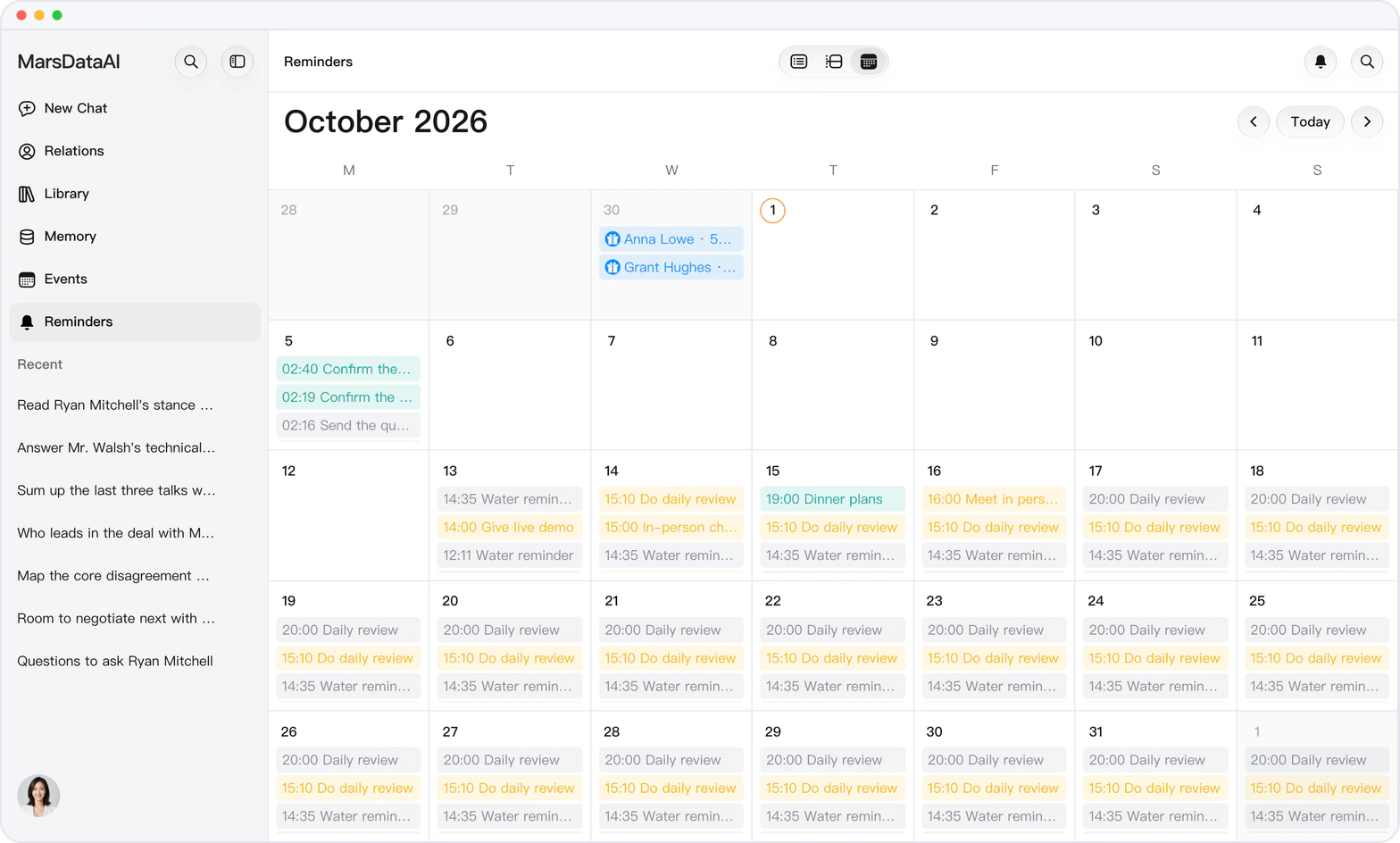
Figure 1. When does a reminder app do the work for you?
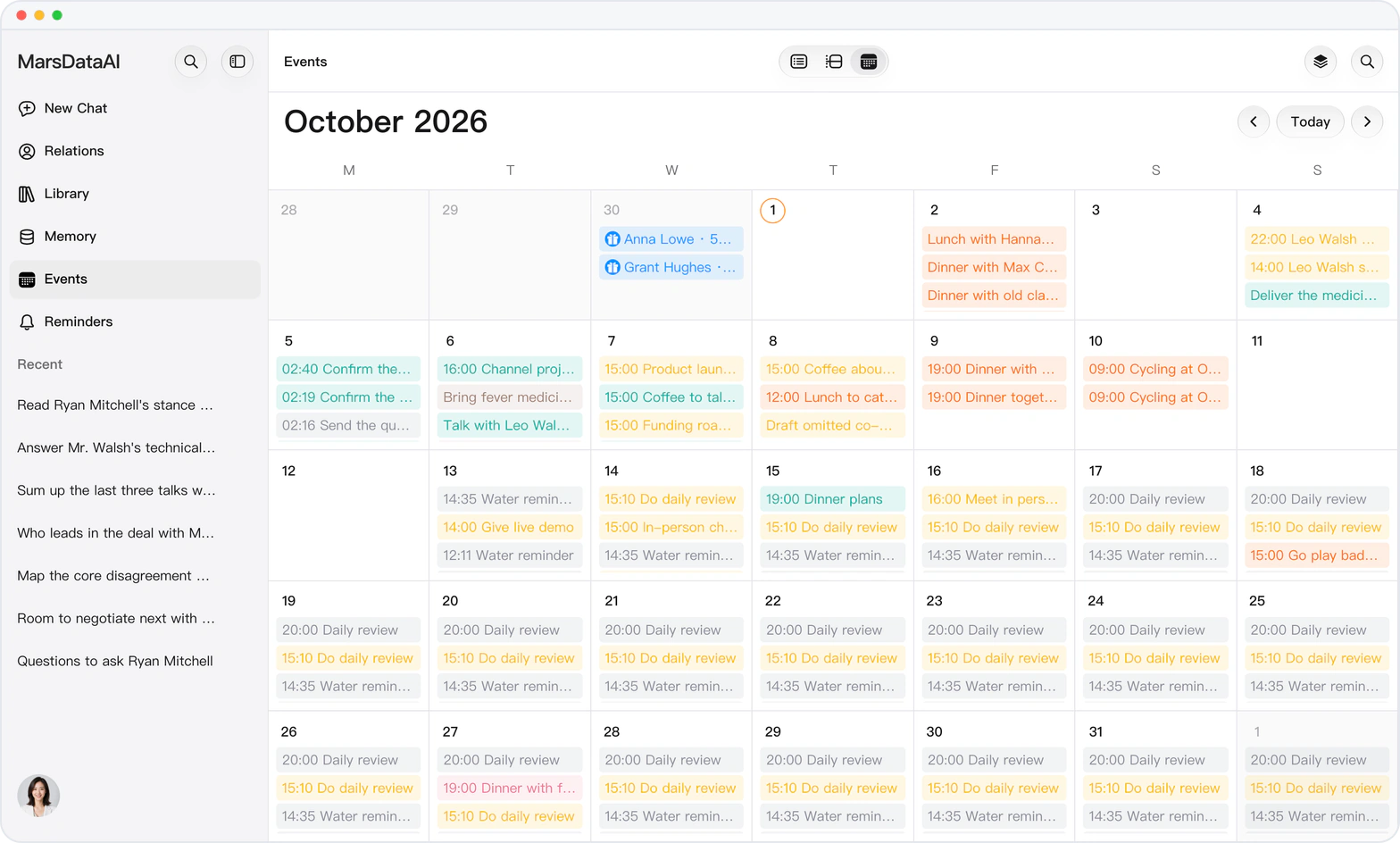
Figure 2. How to add events with an AI calendar assistant
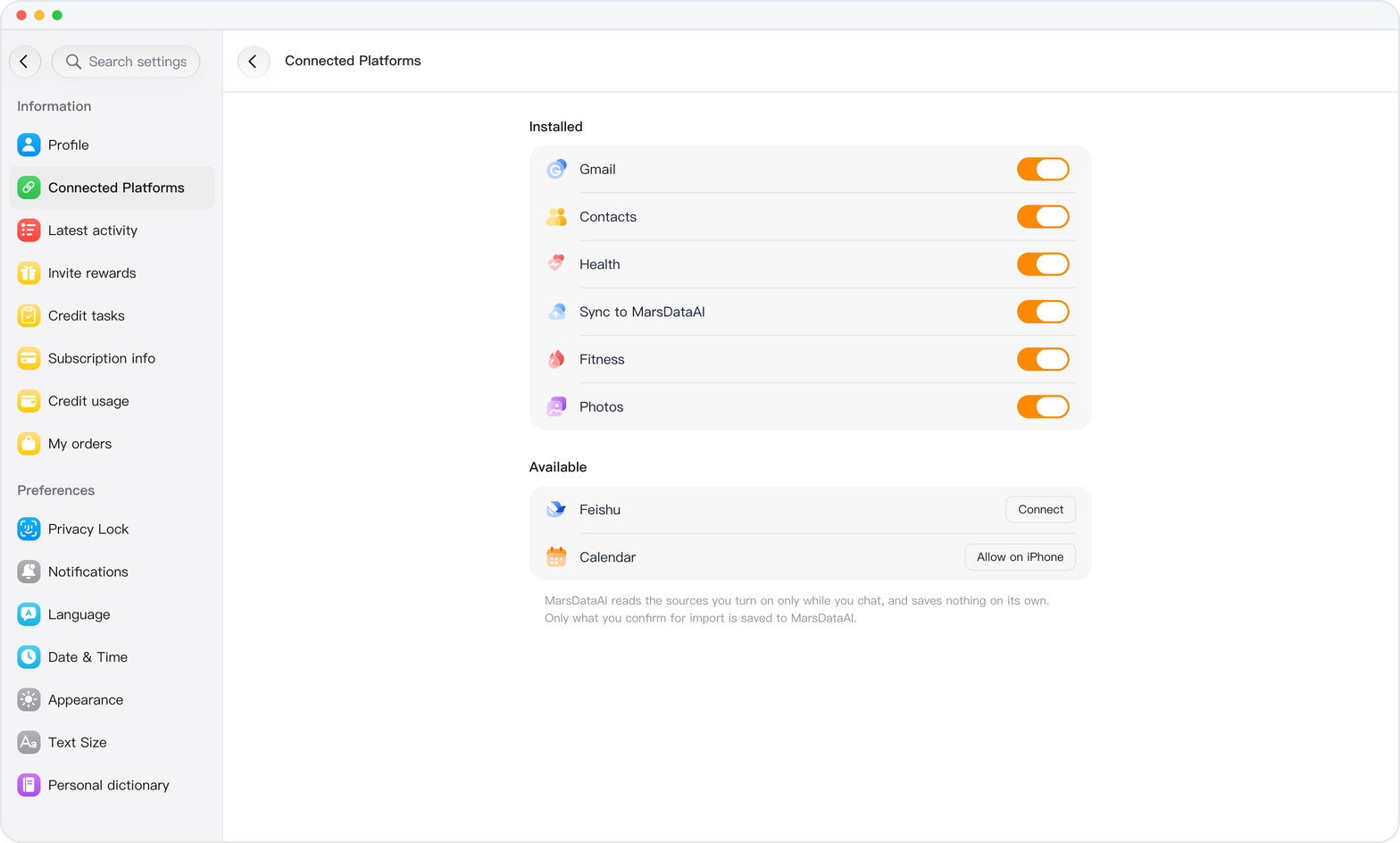
Figure 3. How to reach a Gmail AI assistant from WeChat
7. Limitations
First, the studies cited here test general regularities of human behaviour, not Mars itself. They support our design direction but do not prove that using Mars produces the same effects; the product’s effect needs its own evaluation.
Second, several studies draw on specific populations, such as students (Tice & Baumeister, 1997), employees of one large firm (Milkman et al., 2011), clients of three banks (Karlan et al., 2016), members of one gym (Calzolari & Nardotto, 2017) and patients of health services (Guy et al., 2012; Milkman et al., 2021), so generalizing to other cultures and tasks calls for care. The effects are modest, for example 4.2 percentage points (Milkman et al., 2011) or an average of 5% (Milkman et al., 2021) (a correction to that study’s supporting information was published in 2025), and the procrastination evidence rests largely on correlations (Steel, 2007).
Third, the size of nudge effects is contested. After correction for publication bias, no evidence for an average effect remains (Maier et al., 2022); default effects vary widely between studies (Jachimowicz et al., 2019); and the meta-analysis being re-analysed itself reported publication bias and published a correction, in which the reminder-specific estimate, d = 0.29, is smaller than the overall d = 0.43 (Mertens et al., 2022). The default analogy in section 5 has a further limit: defaults were more effective when they worked through endorsement or endowment (Jachimowicz et al., 2019), and a scheduled prompt is neither. We cite this work for direction, not for an expected effect size.
Fourth, more reminders are not always better. In the savings experiments, there was no evidence that additional late reminders had an additive effect (Karlan et al., 2016). In a retrospective cohort study of 112 ambulatory primary care clinicians receiving electronic health record alerts, the likelihood of accepting a clinical reminder was 30% lower for each additional reminder received per encounter and 10% lower for each five-percentage-point rise in the share of repeated reminders, although newly deployed reminders did not show declining response over time (Ancker et al., 2017); that population is clinicians at work, so the transfer to a personal assistant’s reminders is by analogy. Text-message programs with individualized or decreasing message frequency were more successful than those with a fixed frequency (Head et al., 2013), and distinctive cues can outperform electronic reminder messages (Rogers & Milkman, 2016). In Mars, a reminder that starts a conversation runs the prompt you wrote, event alerts follow the events saved from what you mention, and WeChat reminders are a switch you turn on under Settings > Notifications.
8. Conclusion
Starting is where intentions most often stall: the effort is immediate and the reward later, the intention slips from memory at the moment to act, and doing nothing is the path of least resistance. The research points to matching remedies: cues set in advance that arrive at the moment to act, reminders that state concretely what to do, and arrangements in which the first step happens by default. Mars reminders that start a conversation from your prompt, events saved from chat and event alerts in WeChat are designed on this evidence, within the limits stated above.
References
Listed in APA 7th edition style, each with its original DOI link.
- Ancker, J. S., Edwards, A. M., Nosal, S. C., Hauser, D., Mauer, E. A., & Kaushal, R. (2017). Effects of workload, work complexity, and repeated alerts on alert fatigue in a clinical decision support system. BMC Medical Informatics and Decision Making, 17(1), 36. https://doi.org/10.1186/s12911-017-0430-8
- Calzolari, G., & Nardotto, M. (2017). Effective reminders. Management Science, 63(9), 2915–2932. https://doi.org/10.1287/mnsc.2016.2499
- Einstein, G. O., & McDaniel, M. A. (1990). Normal aging and prospective memory. Journal of Experimental Psychology: Learning, Memory, and Cognition, 16(4), 717–726. https://doi.org/10.1037/0278-7393.16.4.717
- Einstein, G. O., McDaniel, M. A., Thomas, R. C., Mayfield, S., Shank, H., Morrisette, N., & Breneiser, J. E. (2005). Multiple processes in prospective memory retrieval: Factors determining monitoring versus spontaneous retrieval. Journal of Experimental Psychology: General, 134(3), 327–342. https://doi.org/10.1037/0096-3445.134.3.327
- Gilbert, S. J. (2015). Strategic offloading of delayed intentions into the external environment. Quarterly Journal of Experimental Psychology, 68(5), 971–992. https://doi.org/10.1080/17470218.2014.972963
- Guy, R., Hocking, J. S., Wand, H. C., Stott, S., Ali, H., & Kaldor, J. M. (2012). How effective are short message service reminders at increasing clinic attendance? A meta-analysis and systematic review. Health Services Research, 47(2), 614–632. https://doi.org/10.1111/j.1475-6773.2011.01342.x
- Head, K. J., Noar, S. M., Iannarino, N. T., & Grant Harrington, N. (2013). Efficacy of text messaging-based interventions for health promotion: A meta-analysis. Social Science & Medicine, 97, 41–48. https://doi.org/10.1016/j.socscimed.2013.08.003
- Jachimowicz, J. M., Duncan, S., Weber, E. U., & Johnson, E. J. (2019). When and why defaults influence decisions: A meta-analysis of default effects. Behavioural Public Policy, 3(2), 159–186. https://doi.org/10.1017/bpp.2018.43
- Karlan, D., McConnell, M., Mullainathan, S., & Zinman, J. (2016). Getting to the top of mind: How reminders increase saving. Management Science, 62(12), 3393–3411. https://doi.org/10.1287/mnsc.2015.2296
- Madrian, B. C., & Shea, D. F. (2001). The power of suggestion: Inertia in 401(k) participation and savings behavior. The Quarterly Journal of Economics, 116(4), 1149–1187. https://doi.org/10.1162/003355301753265543
- Maier, M., Bartoš, F., Stanley, T. D., Shanks, D. R., Harris, A. J. L., & Wagenmakers, E.-J. (2022). No evidence for nudging after adjusting for publication bias. Proceedings of the National Academy of Sciences, 119(31), e2200300119. https://doi.org/10.1073/pnas.2200300119
- Mertens, S., Herberz, M., Hahnel, U. J. J., & Brosch, T. (2022). The effectiveness of nudging: A meta-analysis of choice architecture interventions across behavioral domains. Proceedings of the National Academy of Sciences, 119(1), e2107346118. https://doi.org/10.1073/pnas.2107346118
- Milkman, K. L., Beshears, J., Choi, J. J., Laibson, D., & Madrian, B. C. (2011). Using implementation intentions prompts to enhance influenza vaccination rates. Proceedings of the National Academy of Sciences, 108(26), 10415–10420. https://doi.org/10.1073/pnas.1103170108
- Milkman, K. L., Patel, M. S., Gandhi, L., Graci, H. N., Gromet, D. M., Ho, H., Kay, J. S., Lee, T. W., Akinola, M., Beshears, J., Bogard, J. E., Buttenheim, A., Chabris, C. F., Chapman, G. B., Choi, J. J., Dai, H., Fox, C. R., Goren, A., Hilchey, M. D., … Duckworth, A. L. (2021). A megastudy of text-based nudges encouraging patients to get vaccinated at an upcoming doctor’s appointment. Proceedings of the National Academy of Sciences, 118(20), e2101165118. https://doi.org/10.1073/pnas.2101165118
- Rogers, T., & Milkman, K. L. (2016). Reminders through association. Psychological Science, 27(7), 973–986. https://doi.org/10.1177/0956797616643071
- Sheeran, P., & Webb, T. L. (2016). The intention–behavior gap. Social and Personality Psychology Compass, 10(9), 503–518. https://doi.org/10.1111/spc3.12265
- Sirois, F. M., & Pychyl, T. A. (2013). Procrastination and the priority of short-term mood regulation: Consequences for future self. Social and Personality Psychology Compass, 7(2), 115–127. https://doi.org/10.1111/spc3.12011
- Steel, P. (2007). The nature of procrastination: A meta-analytic and theoretical review of quintessential self-regulatory failure. Psychological Bulletin, 133(1), 65–94. https://doi.org/10.1037/0033-2909.133.1.65
- Tice, D. M., & Baumeister, R. F. (1997). Longitudinal study of procrastination, performance, stress, and health: The costs and benefits of dawdling. Psychological Science, 8(6), 454–458. https://doi.org/10.1111/j.1467-9280.1997.tb00460.x
Cite this article
Mars Research. (2026). Why starting is the hardest part: procrastination, reminders and start-up cost. MarsDataAI. https://marsdata.ai/research/reminders-that-start-the-work